
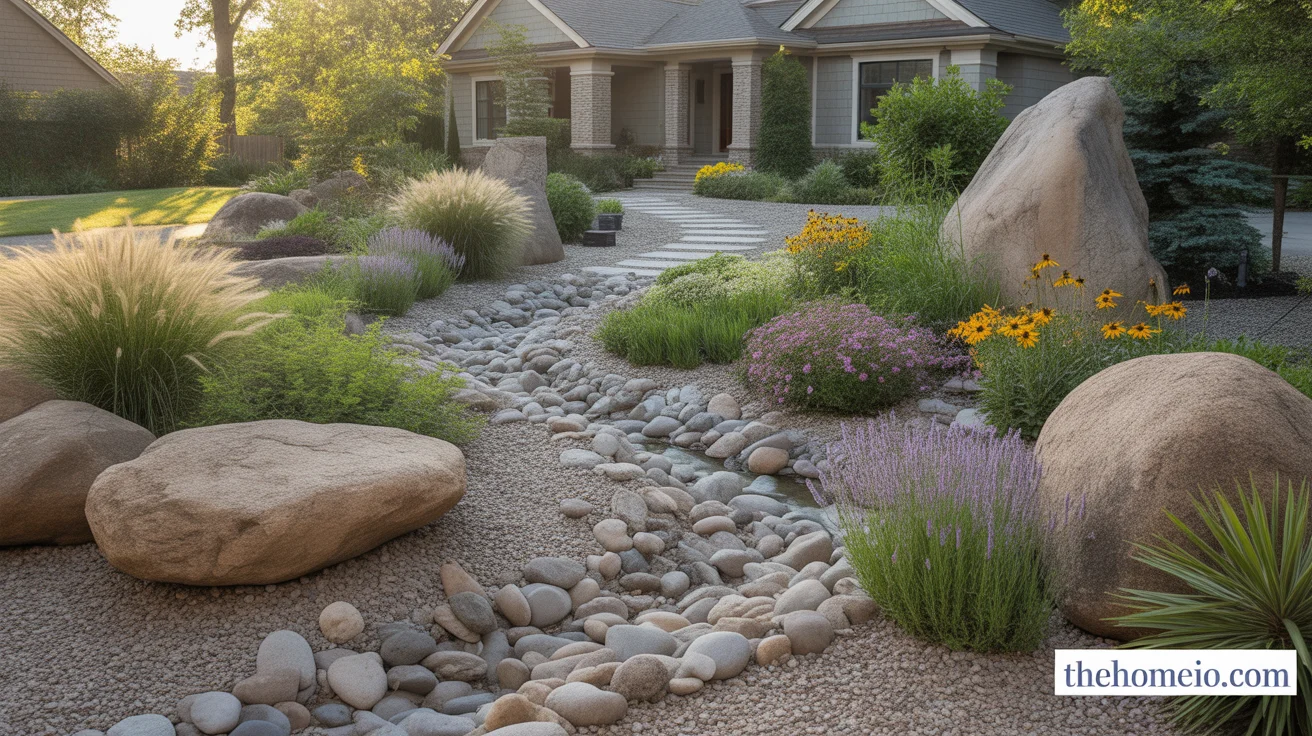
Rocks do not need watering. They do not need mowing. They do not turn brown in July or die in a drought. And when they are used well in a front yard landscape, they look absolutely stunning the kind of thing neighbors stop to ask about.
The problem is that most people either go too minimal with rocks and end up with a yard that looks bare and unfinished, or they go too heavy and end up with something that feels more like a gravel parking lot than a designed landscape. The sweet spot is in between, and these 12 front yard landscaping ideas with rocks show exactly where that sweet spot is.
Every idea here is real, actionable, and doable for an average homeowner. No heavy equipment. No landscape architecture degree. Just smart, practical rock landscaping that actually looks great.
1. Build a Dry Creek Bed Through the Front Yard
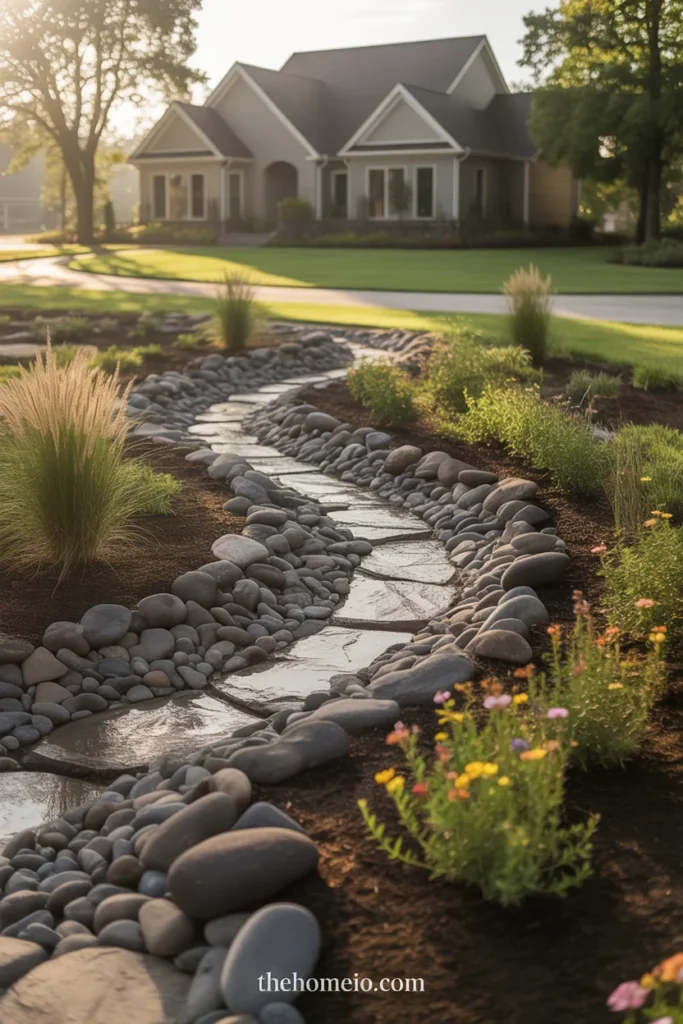
A dry creek bed is one of the most impressive things you can add to a front yard and it is far easier to build than it looks. Dig a shallow winding channel across the yard, line it with landscape fabric, then fill it with a mix of large river rocks on the outside edges and smaller smooth stones in the center to mimic how a real creek would look.
Plant ornamental grasses, black-eyed Susans, or native perennials along the banks to soften the edges. The result looks like something a professional landscape designer charged thousands of dollars for but most homeowners complete a basic dry creek bed in a single weekend for a few hundred dollars at most.
2. Use River Rock as Mulch in Garden Beds
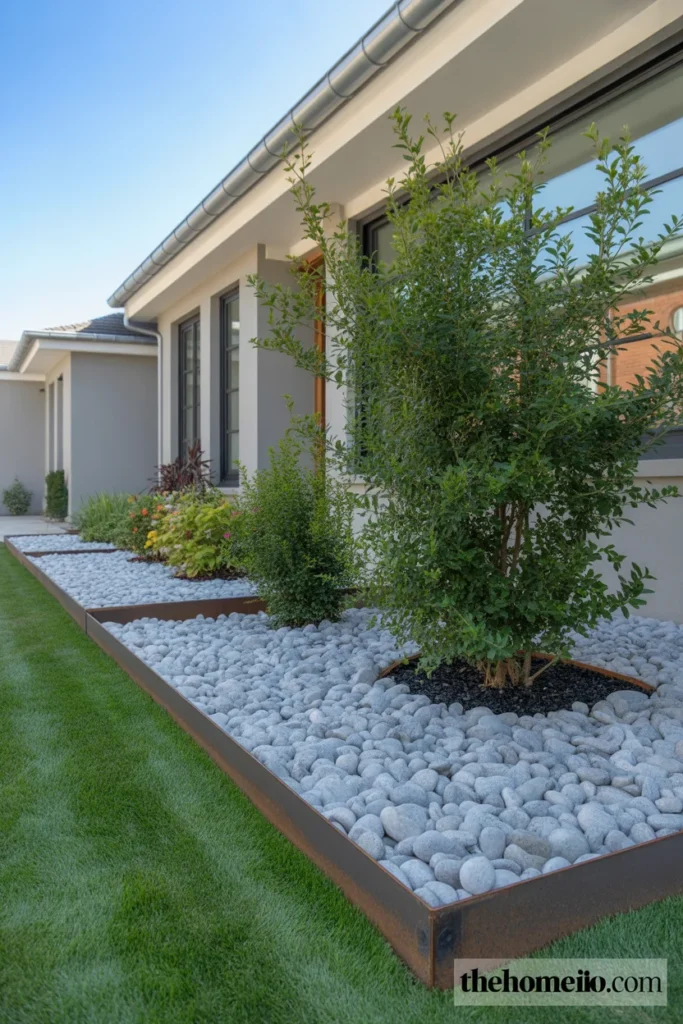
One of the simplest swaps you can make in a front yard is replacing traditional wood mulch with river rock inside your planting beds. River rock does everything mulch does it retains soil moisture, suppresses weeds, and defines the bed but it never breaks down, never needs replacing, and looks more polished and permanent.
Light gray or tan river rock works beautifully against dark green plants and dark house exteriors. White river rock creates a crisp, clean contrast that looks especially sharp in modern or contemporary front yards. The key is using a consistent size most landscape pros recommend one to two inch diameter stones for bed coverage and always laying landscape fabric underneath first to prevent the rocks from sinking into the soil over time.
3. Create a Rock and Lavender Garden
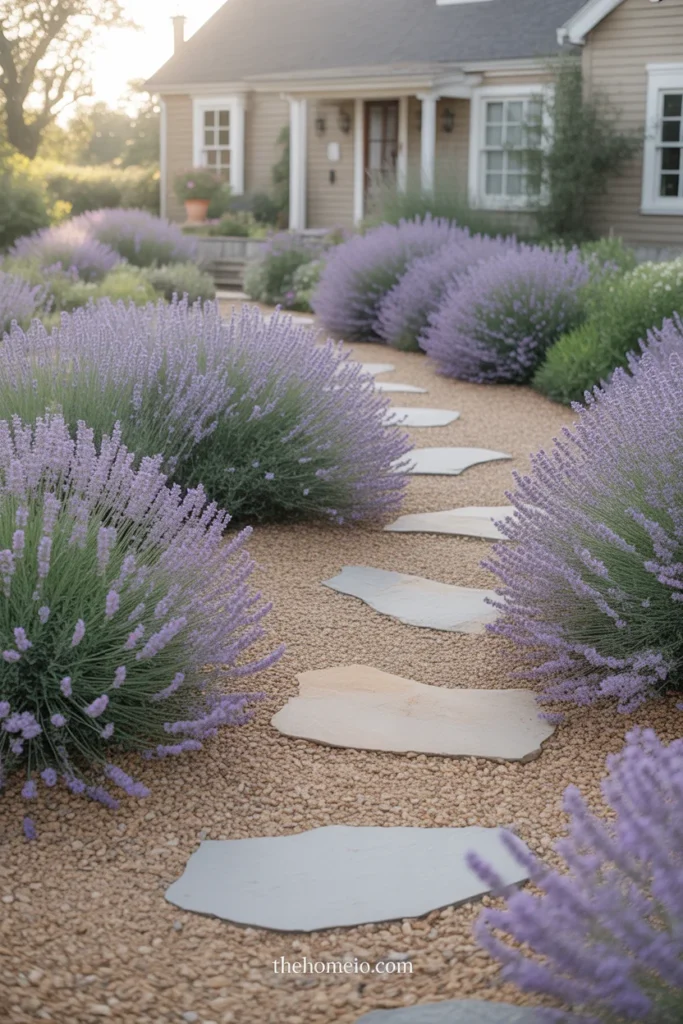
If there is a more beautiful combination in residential landscaping than rocks and lavender, it is hard to think of what it might be. The soft purple blooms, the silvery green foliage, the gentle movement in the breeze all of it is made even more beautiful by the contrast of warm stone and gravel around the base of each plant.
Plant English lavender or Hidcote lavender in groups of three or five, surrounded by decomposed granite or pea gravel. Add a few flat fieldstone pieces as stepping accents through the planting. This combination is naturally drought tolerant, deer resistant, and requires almost no maintenance once the plants are established usually after the first full growing season.
4. Line the Front Walkway With Decorative Boulders
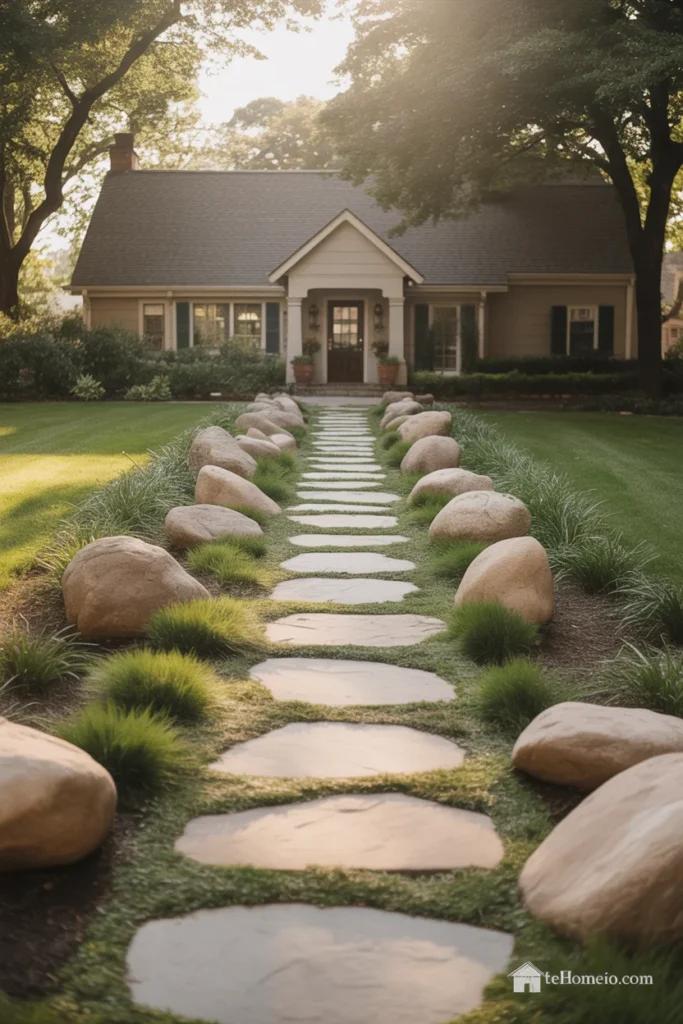
A plain concrete walkway is one of the most common and most overlooked curb appeal problems in front yards. The fix does not have to be expensive or complicated. Simply lining both sides of the existing path with a series of decorative boulders varying in size from medium to large instantly transforms it from a forgettable strip of concrete into a designed landscape feature.
Choose boulders in a tone that complements your house exterior. Warm tan and rust boulders work beautifully with brick homes. Cool gray granite boulders look sharp against white or gray siding. Tuck low ornamental grasses or creeping ground cover between the boulders to soften the edges and make the whole setup feel more natural and less like a construction site.
5. Replace the Lawn With Decomposed Granite
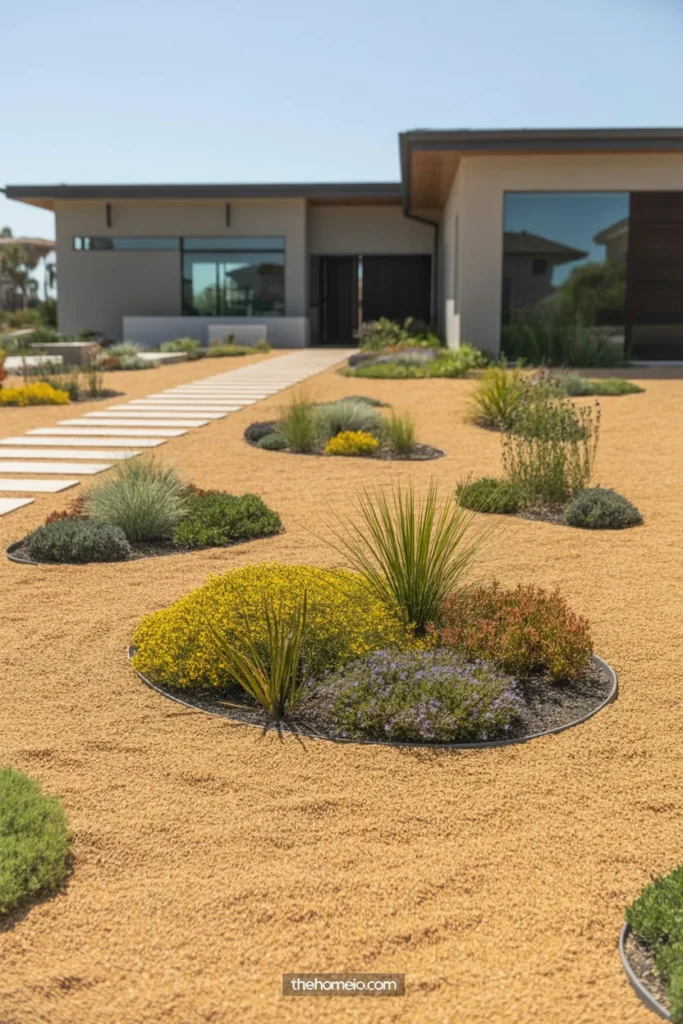
Decomposed granite often called DG is one of the most popular materials in modern front yard landscaping for good reason. It compacts firmly underfoot, drains beautifully, comes in warm natural tones ranging from gold to rusty brown, and gives a front yard a clean, finished quality that gravel alone cannot quite achieve.
Replace the entire lawn with a base layer of decomposed granite and suddenly the maintenance burden drops to almost zero. No mowing. No watering. No fertilizing. Add planting islands throughout the DG surface filled with ornamental grasses, native shrubs, and drought-tolerant perennials to keep the yard feeling alive and planted rather than bare.
6. Build a Stacked Stone Garden Border For Rock Landscaping Ideas
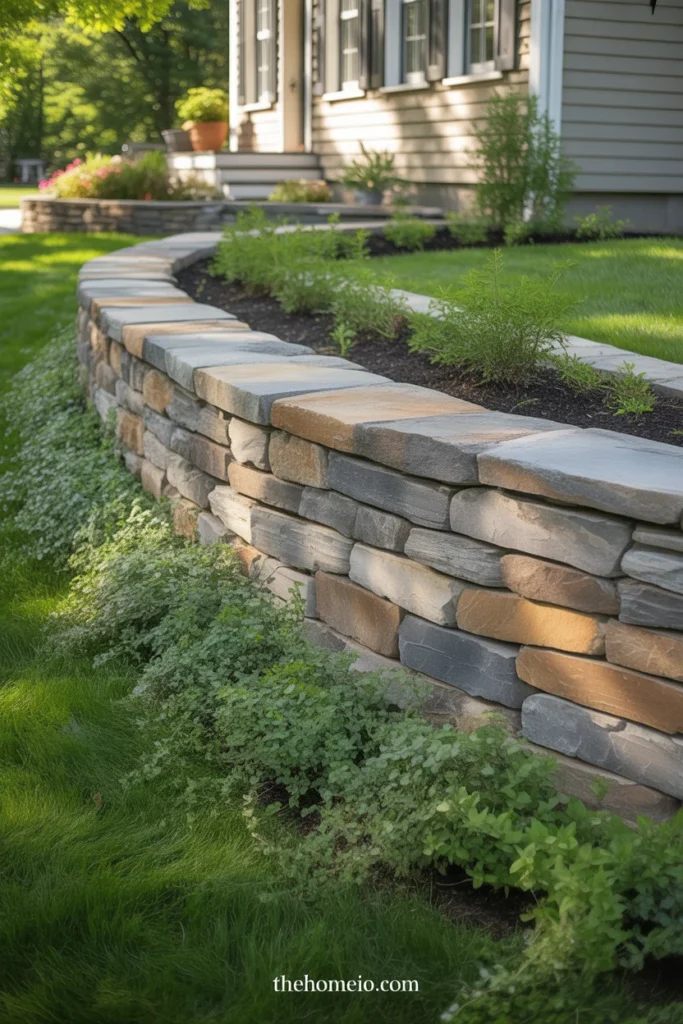
A stacked stone border along the edge of a front yard garden bed or along the property line is one of those details that takes a landscape from looking average to looking genuinely designed. Even a single course of flat fieldstone stacked two or three stones high creates a visual boundary that feels intentional, permanent, and high quality.
Use locally sourced fieldstone or flagstone for the most natural look and the lowest cost since shipping heavy stone long distances adds up fast. Stack the stones dry, without mortar, for a traditional look that also allows for easy adjustment over time. Plant low ground covers or trailing perennials right at the base of the wall so the plants soften the edge and the whole thing feels settled and established.
7. Design a Rock Mulch Xeriscape Front Yard
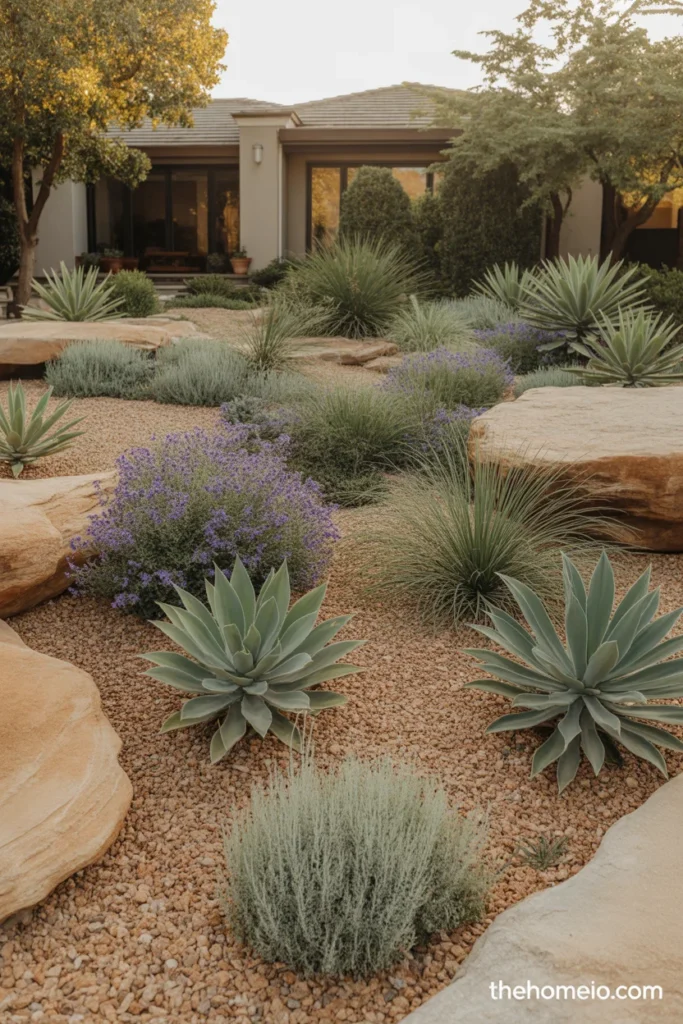
Xeriscaping landscaping designed to minimize water use has become one of the fastest growing trends in residential landscaping. And rock mulch is at the center of almost every great xeriscape design. Crushed granite, river pebbles, or lava rock used as a ground cover between drought-tolerant plants creates a front yard that looks lush and designed while using a fraction of the water a traditional lawn requires.
The most common mistake homeowners make with xeriscape rock gardens is planting too few plants and using too much bare rock. A well-designed xeriscape front yard is about sixty percent planted and forty percent rock not the other way around.
8. Add a Flagstone Stepping Stone Path Through Plantings
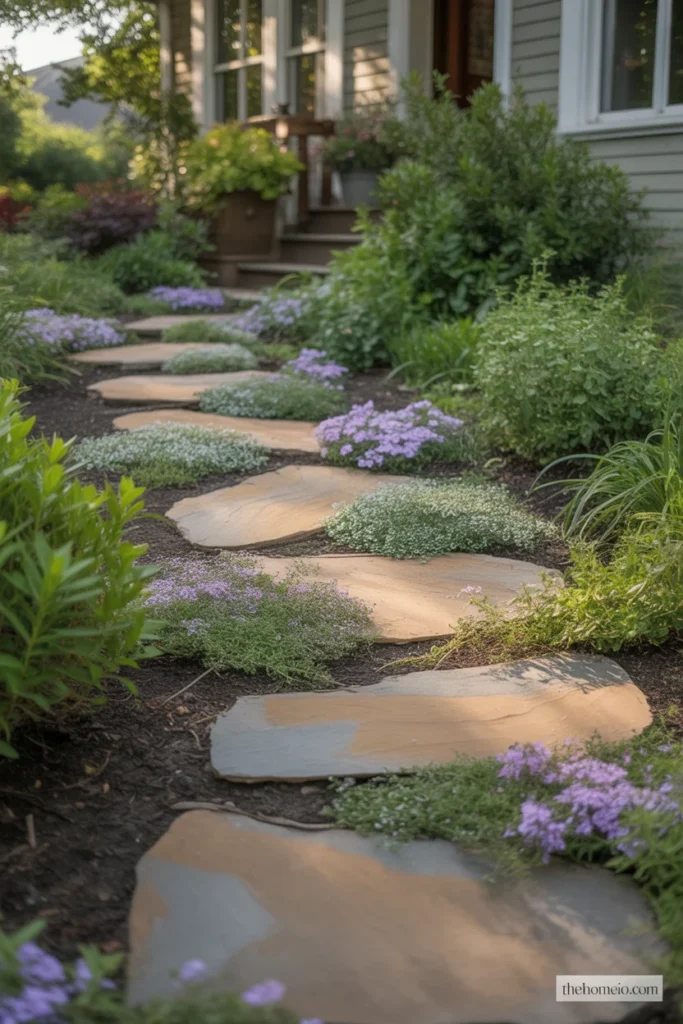
A flagstone path that winds through a planted front yard does two things exceptionally well. It gives visitors a clear, beautiful route from the sidewalk to the front door, and it breaks up large planted areas in a way that makes the whole landscape feel more accessible and intentional.
Choose irregular natural flagstone in a warm gray or tan tone for the most timeless look. Set each stone deep enough that the top surface sits flush with or just slightly above the surrounding soil, this prevents tripping and keeps the path looking clean. Plant low thyme, creeping phlox, or Irish moss between the stones to soften the joints and add color.
9. Use White Rock for a Crisp Clean Modern Look
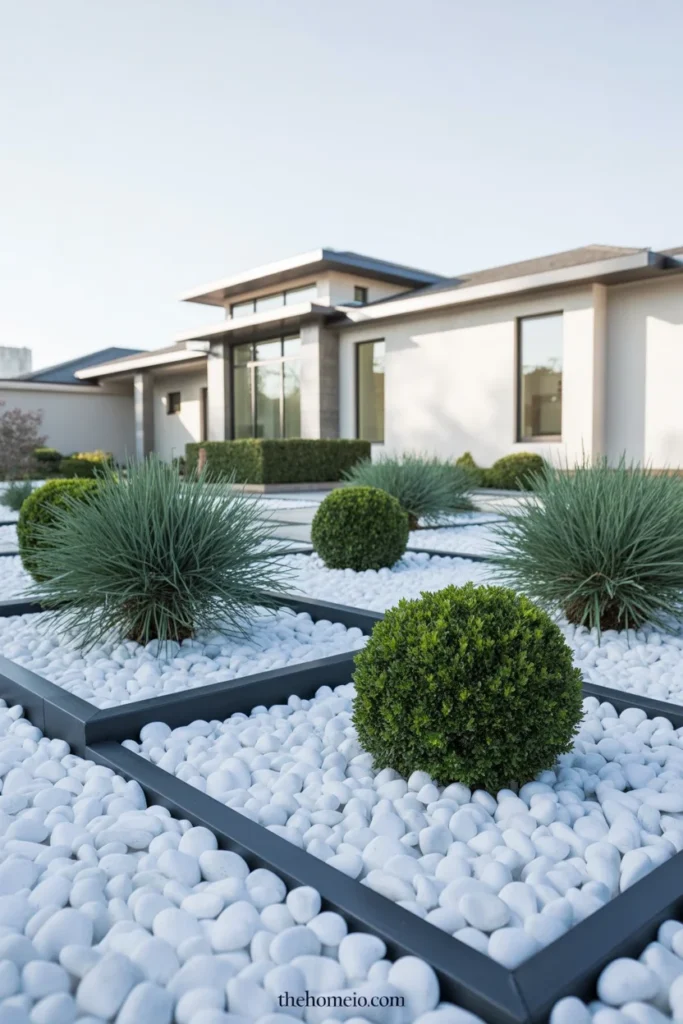
White decorative rock whether white marble chips, white river pebbles, or white crushed limestone has a clean, high-contrast quality that works especially well in modern and contemporary front yard designs. Against dark green plants, black steel edging, and a dark or white house exterior, white rock reads as sharp, intentional, and genuinely sophisticated.
The most important rule with white rock is keeping it clean. It shows dirt and debris more than darker stones, so a leaf blower pass every couple of weeks is necessary to keep it looking its best. Always use a quality landscape fabric underneath to prevent soil from discoloring the stones from below over time.
10. Create a Rock Garden With Alpine Plants
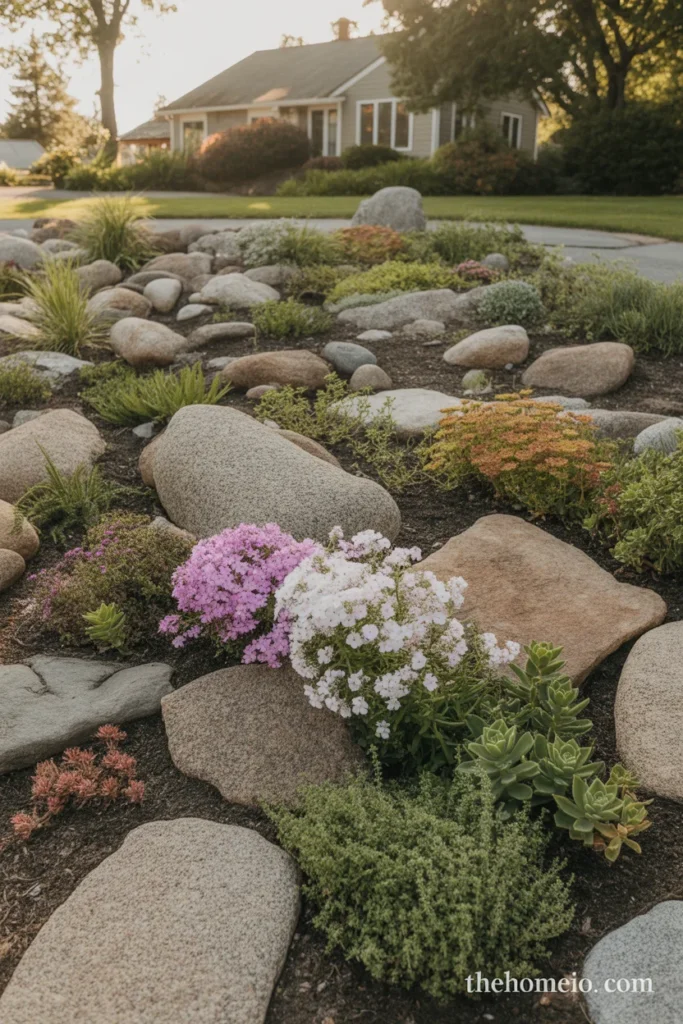
A true rock garden where plants grow between and around rocks in a naturalistic arrangement is one of the most beautiful and lowest maintenance front yard features you can create. The key is choosing plants that genuinely thrive in rocky, well-drained conditions rather than forcing plants that prefer rich soil into a rocky setting where they will struggle.
Creeping phlox, hens and chicks, sedum varieties, thyme, and low-growing dianthus are all excellent choices for a front yard rock garden. These plants are naturally adapted to thin, rocky soil, need minimal water once established, and spread gradually to fill spaces between rocks in a way that looks completely natural.
11. Frame the Driveway With Rock Borders
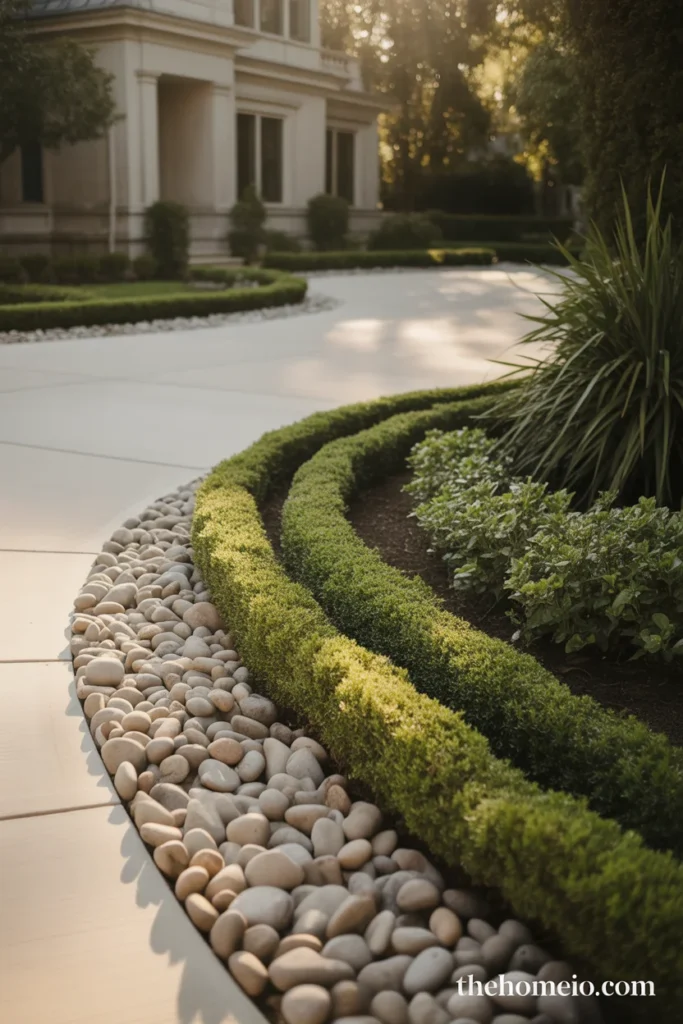
The driveway is one of the largest visual elements of any front yard and most homeowners completely ignore the edges. Framing both sides of the driveway with a defined rock border immediately elevates the entire front yard. Use large river rocks or boulders to create a clear, bold edge, then backfill behind the rocks with smaller decorative gravel or plant low ornamental grasses and ground covers.
This idea works especially well for long driveways where the approach to the house is a significant part of the curb appeal experience. A well-framed driveway communicates that the whole property has been thoughtfully designed, which is exactly the message you want to send whether you are welcoming guests or impressing potential buyers.
12. Mix Boulders and Flowering Perennials for Four-Season Interest
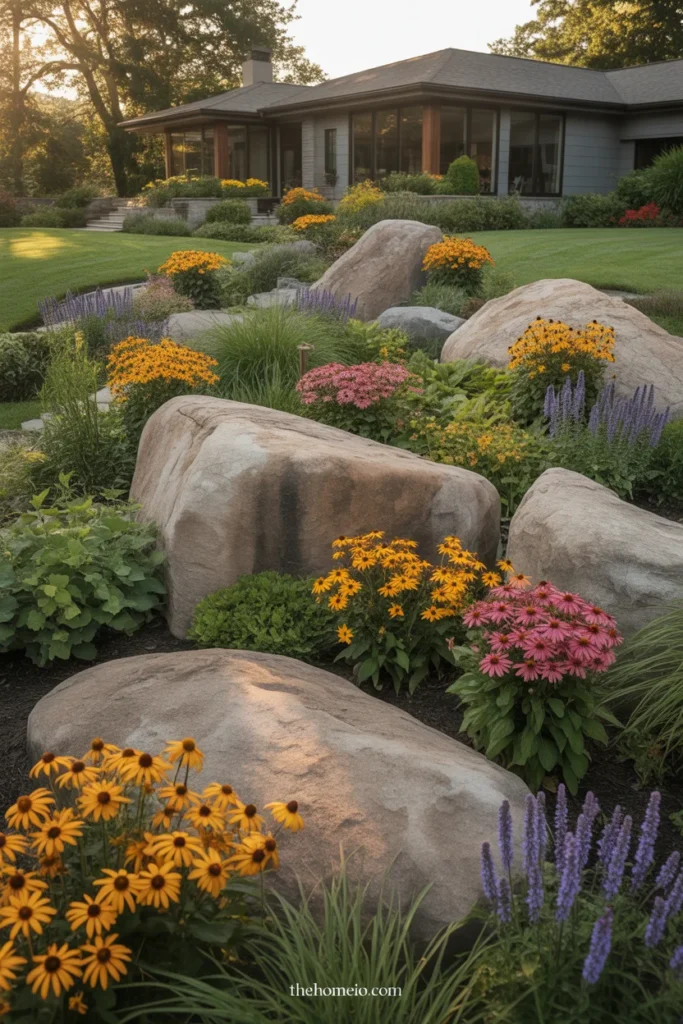
The most beautiful rock landscapes are not just rocks. They are a conversation between hard stone and soft living plants and nowhere does that conversation happen more beautifully than when large boulders are paired with bold flowering perennials in a layered front yard planting.
Place two or three large boulders of varying sizes in an organic cluster near the center or corner of the front yard. Then plant around them with coneflowers, black-eyed Susans, ornamental grasses, and salvia. In spring the early perennials wake up around the boulders. In summer the blooms are full and colorful. In fall the grasses and seed heads add texture. In winter the boulders themselves hold the composition together beautifully even when everything else has gone dormant.
Rocks Are the Most Honest Material in Landscaping
They do not pretend to be something they are not. They do not need to be replaced every spring. They look better as they age, settle, and get weathered by the seasons. And when they are paired with the right plants and the right design, they create front yards that feel genuinely permanent and genuinely beautiful.
Start with one idea from this list the one that fits your yard, your budget, and your style. Get it done well. Then step back and notice how quickly even one well-executed rock element changes the entire feeling of your front yard.


1 thought on “12 Rock Landscaping Ideas for the Front Yard That Look Great and Last Forever”