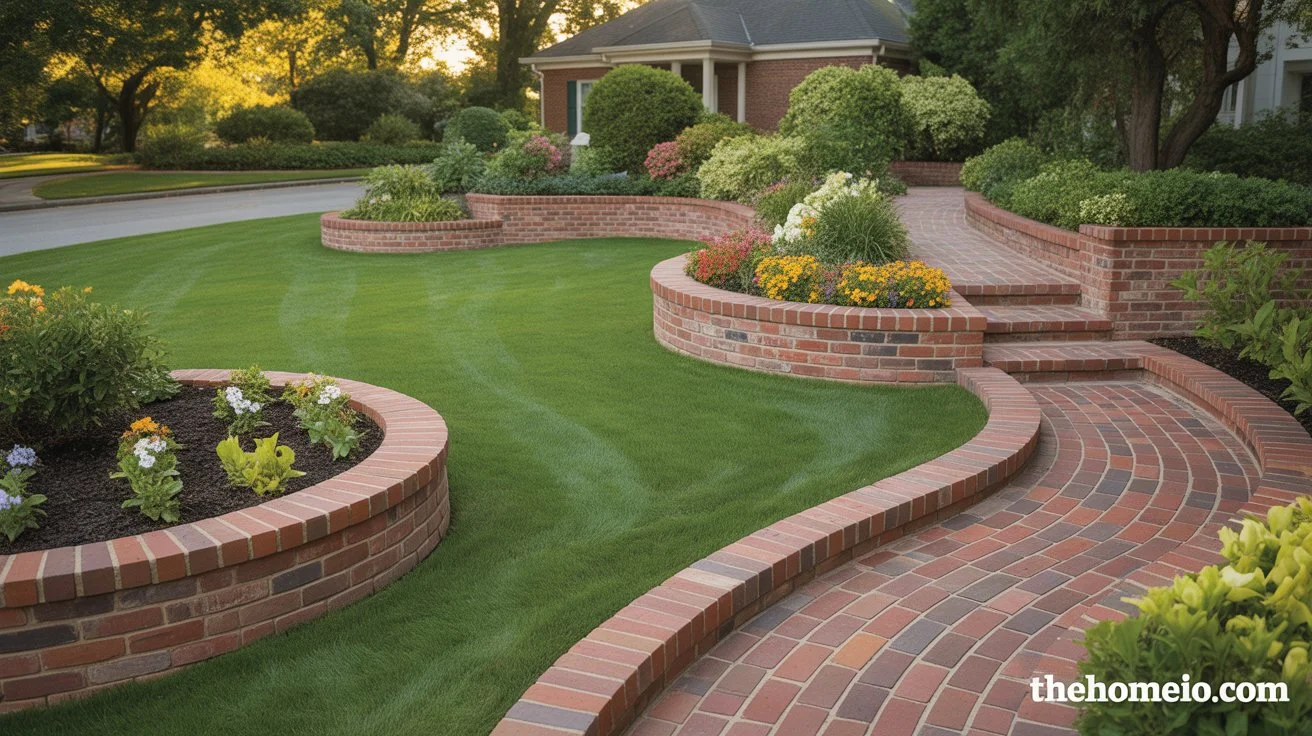
Well-designed Brick Garden Edging Ideas can completely change how a yard looks.
Without edging, flower beds often blend into the lawn, mulch drifts out of place, and landscaping can feel unfinished. A simple brick border creates clean lines, improves organization, and adds timeless character to the entire outdoor space.
That is why brick border garden edging remains one of the most popular DIY landscaping upgrades.
Bricks are durable, affordable, and versatile enough to work with everything from cottage gardens to modern front yards. These ideas will help you choose a brick edging style that fits your landscape while adding long-lasting curb appeal.
1. Lay Bricks Flat for a Clean Traditional Border
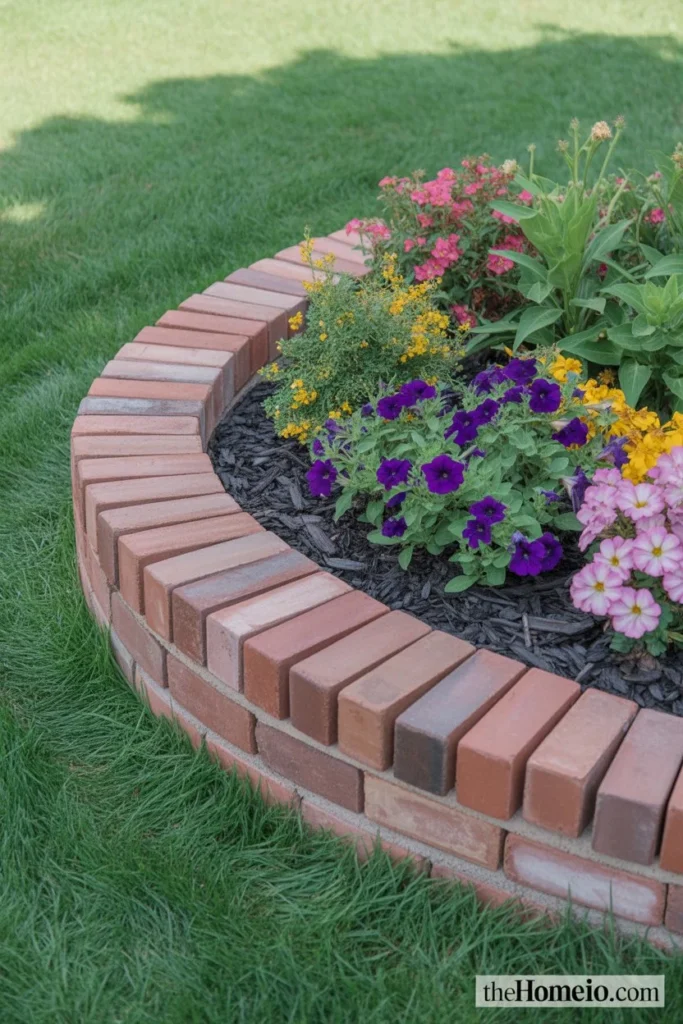
One of the easiest methods is placing bricks flat along the edge of a garden bed.
This approach creates a simple, neat border that works well in both front and backyard landscapes. It is also one of the most beginner-friendly options for homeowners learning how to lay brick garden edging.
DIY Tip
Dig a shallow trench, add compacted sand, and level each brick before placing it.
2. Install Soldier Course Edging for Classic Curb Appeal
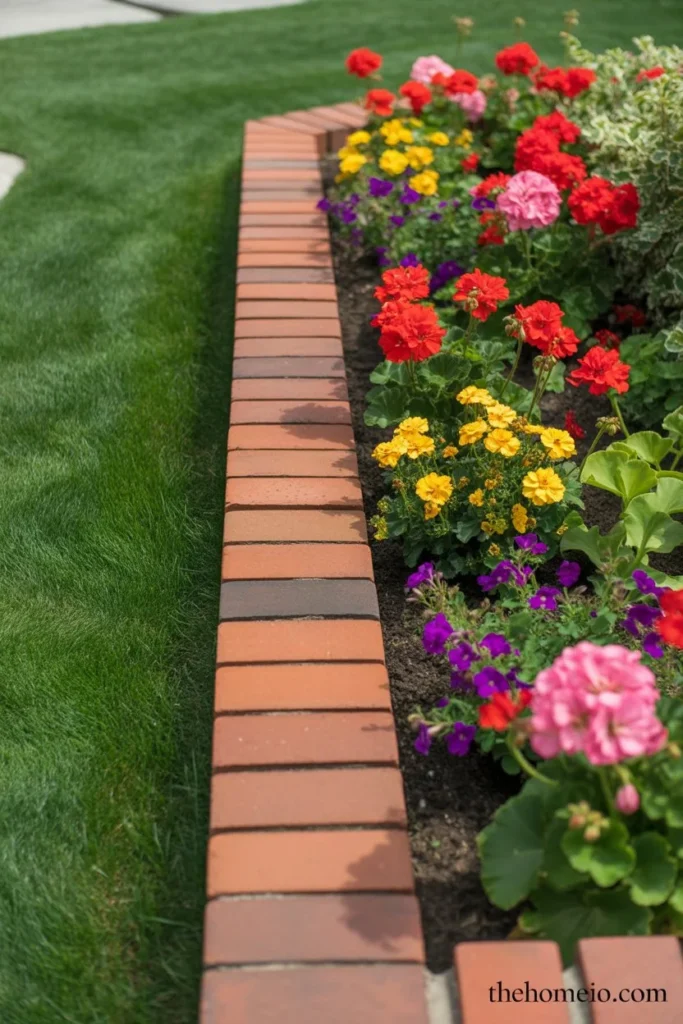
A soldier courses the border stands bricks vertically instead of laying them flat.
This creates a taller, more defined edge that instantly adds structure to flower beds and walkways while giving landscaping a traditional, professional appearance.
3. Create a Curved Brick Garden Border
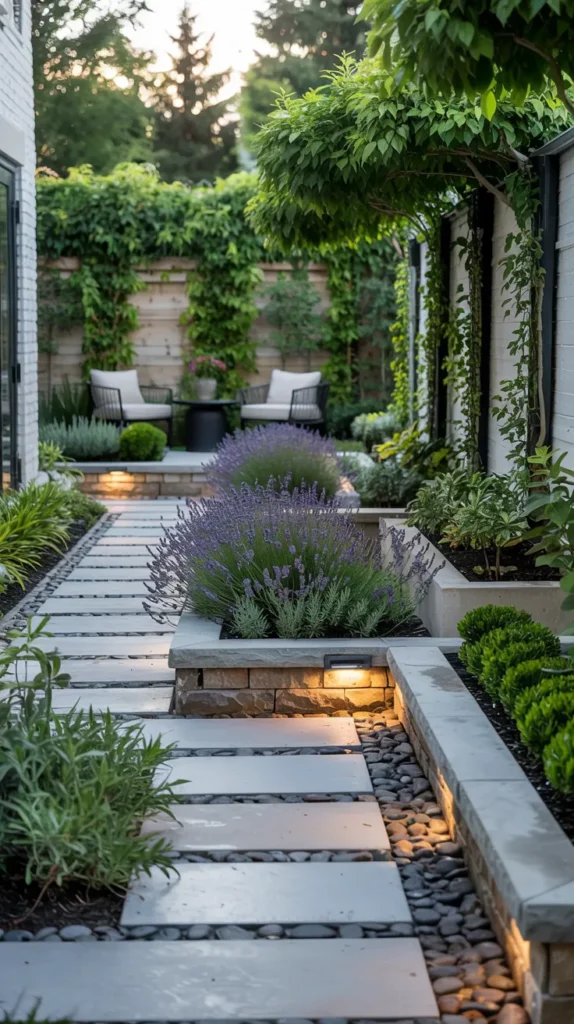
Straight lines look great, but curves often feel more natural.
Curved brick edging follows the shape of flower beds and landscape islands beautifully, helping gardens feel softer and more organic.
This is one of the most attractive brick garden edging ideas for cottage-style landscapes.
4. Use Reclaimed Bricks for Vintage Charm
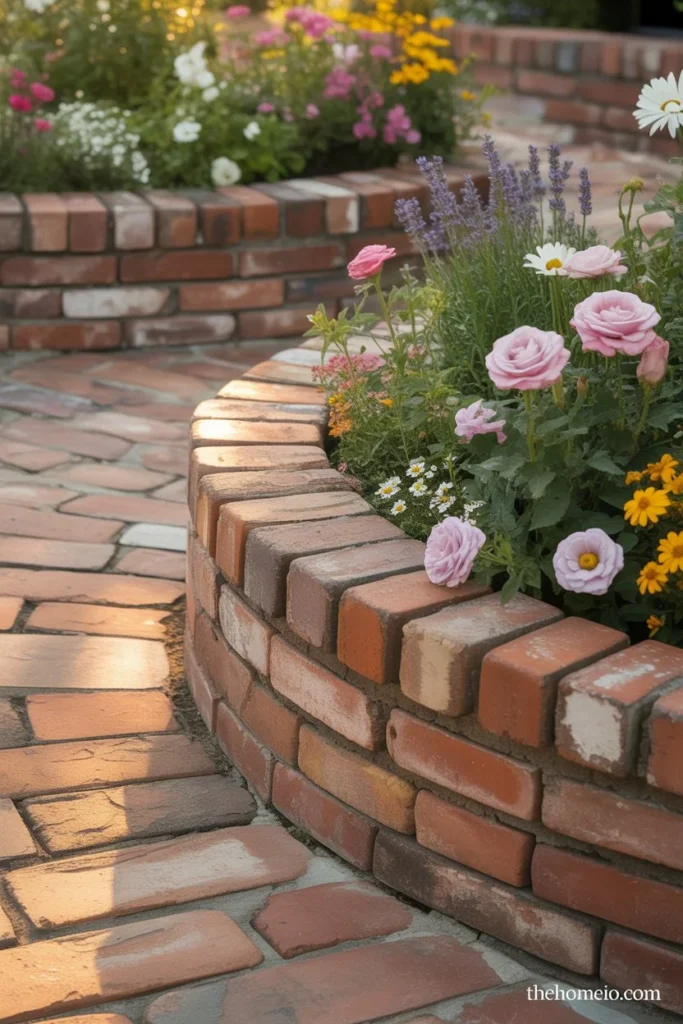
Old reclaimed bricks bring character that new materials often cannot match.
The weathered colors and aged textures create a lived-in appearance that works especially well in cottage gardens, farmhouse landscapes, and historic homes.
5. Build a Herringbone Brick Edge
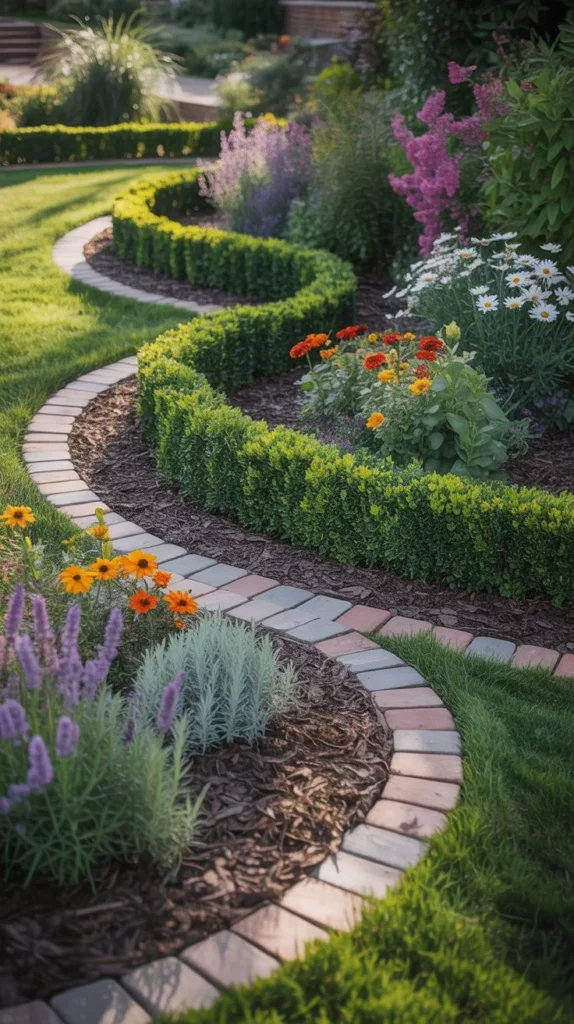
For a more decorative approach, consider a herringbone pattern.
The interlocking design creates visual interest while making the border feel custom and professionally installed.
This style works particularly well beside pathways and formal garden beds.
6. Add Brick Edging Around Flower Beds
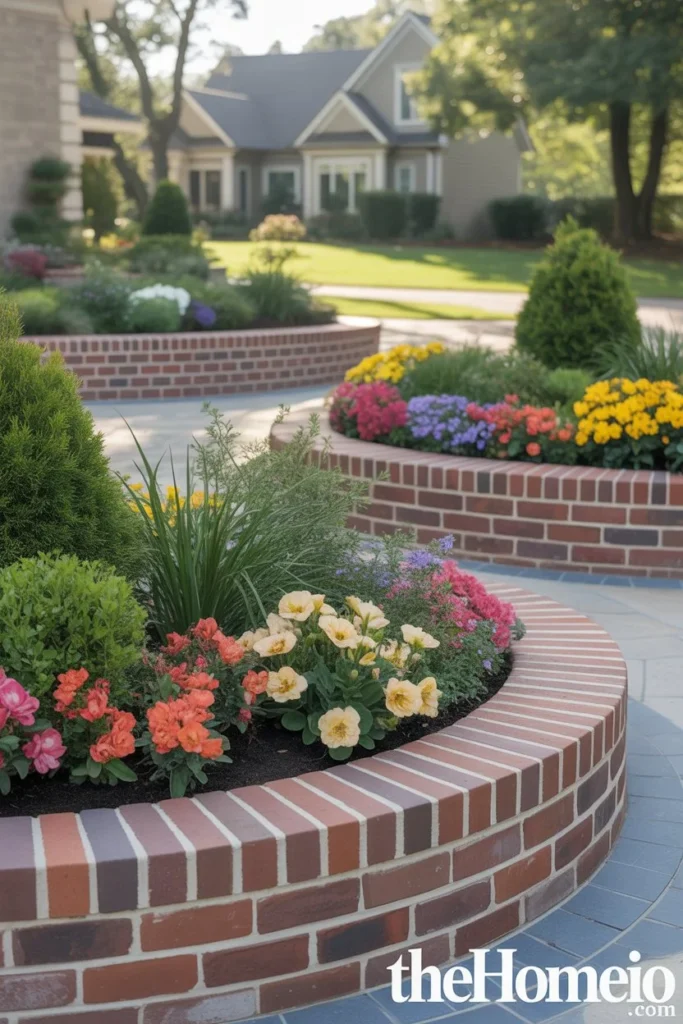
Flower beds benefit greatly from clear definition.
A brick border keeps mulch contained, separates planting areas from the lawn, and helps flowers become the focal point of the landscape.
This remains one of the most practical uses for brick garden edging for flower beds.
7. Create a Double-Row Brick Border
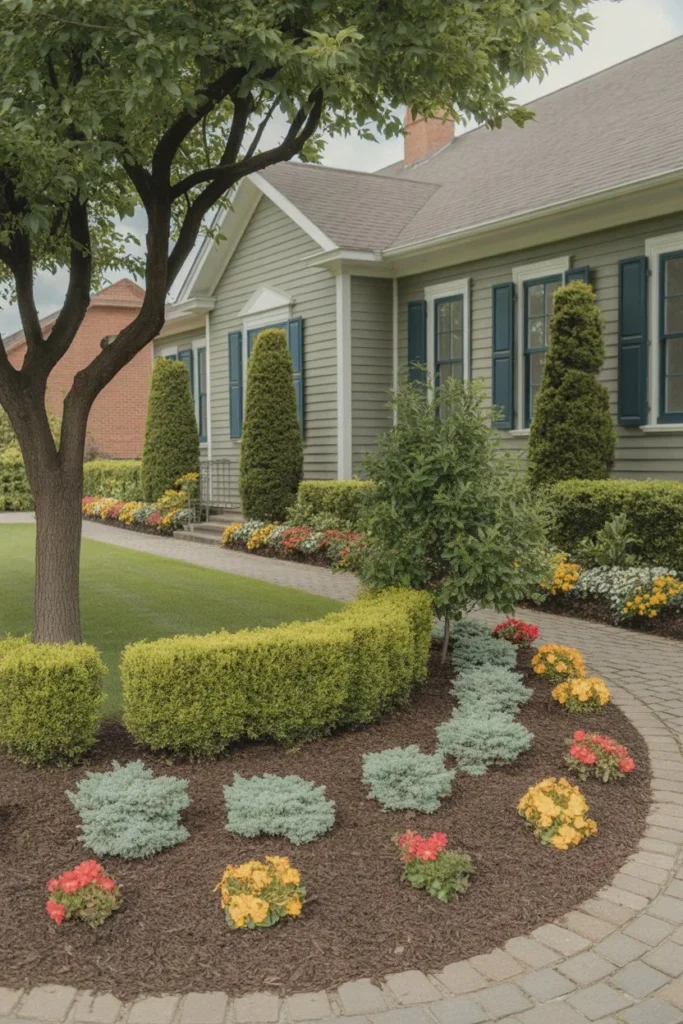
Using two rows instead of one adds extra visual weight.
Double-row borders look substantial and help larger garden beds feel more intentional, especially in spacious front-yard landscapes.
15 Amazing Birthday Party Decor Ideas That Instantly Make Any Celebration Feel Special
8. Build a Raised Brick Garden Edge
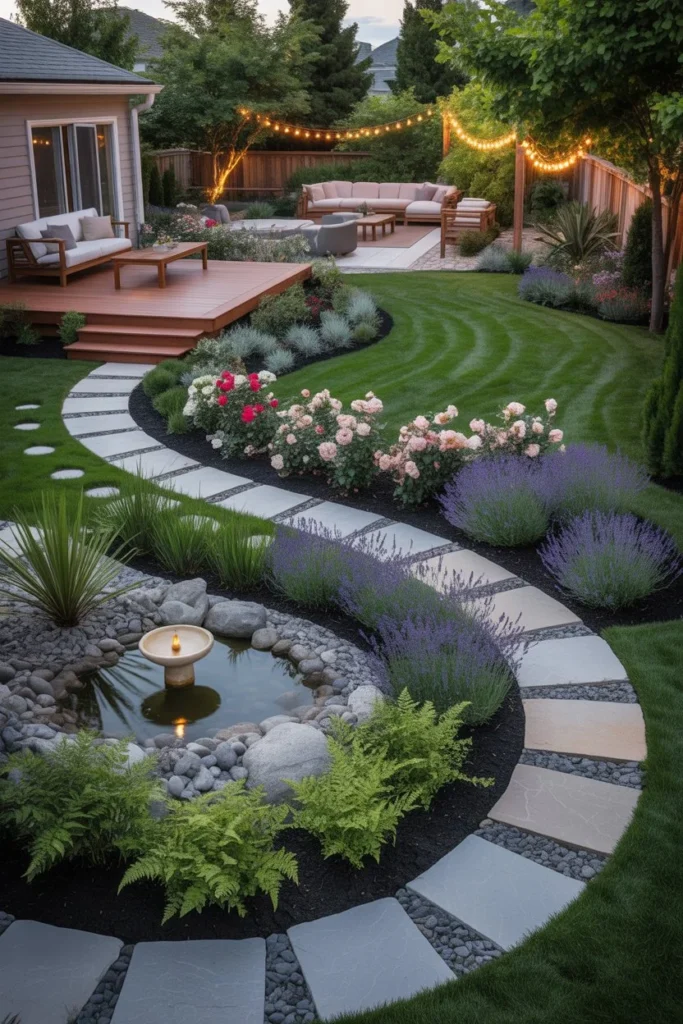
A slightly elevated brick border adds depth and dimension.
Raised edging helps define planting areas while creating a more finished look around flower beds, shrubs, and decorative landscaping features.
This style also helps with mulch retention.
9. Edge Garden Paths with Brick Borders
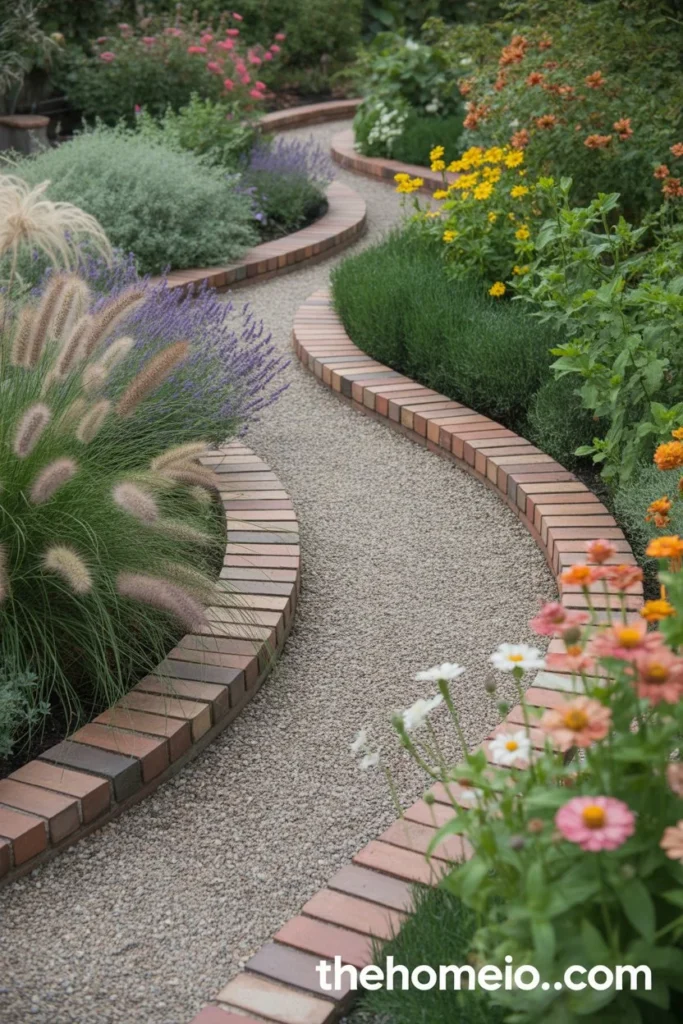
Brick edging works beautifully alongside pathways.
Whether the path is gravel, stone, or mulch, a brick border provides clean separation while helping the walkway maintain its shape over time.
This is one of the most useful brick border landscaping ideas for larger yards.
10. Stack Bricks for Extra Height
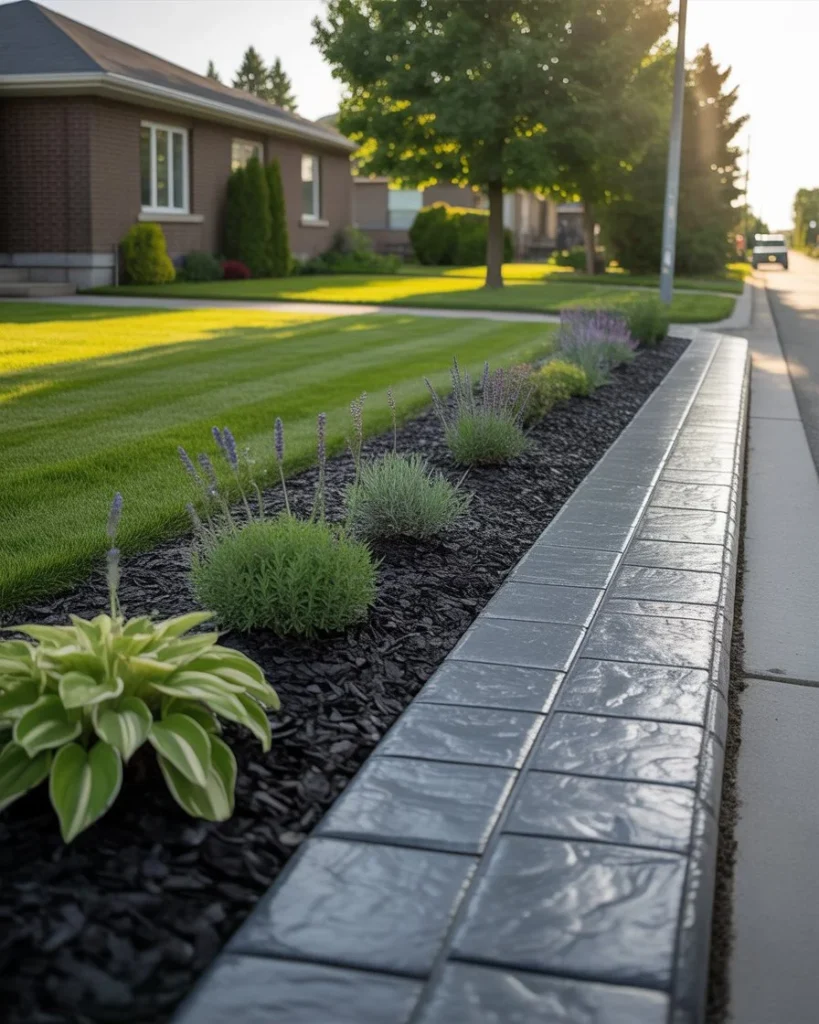
Stacked brick edging creates stronger visual definition.
This method works particularly well when separating garden beds from sloped lawns or when creating raised planting areas that need additional support.
11. Mix Brick and Gravel for a Modern Look
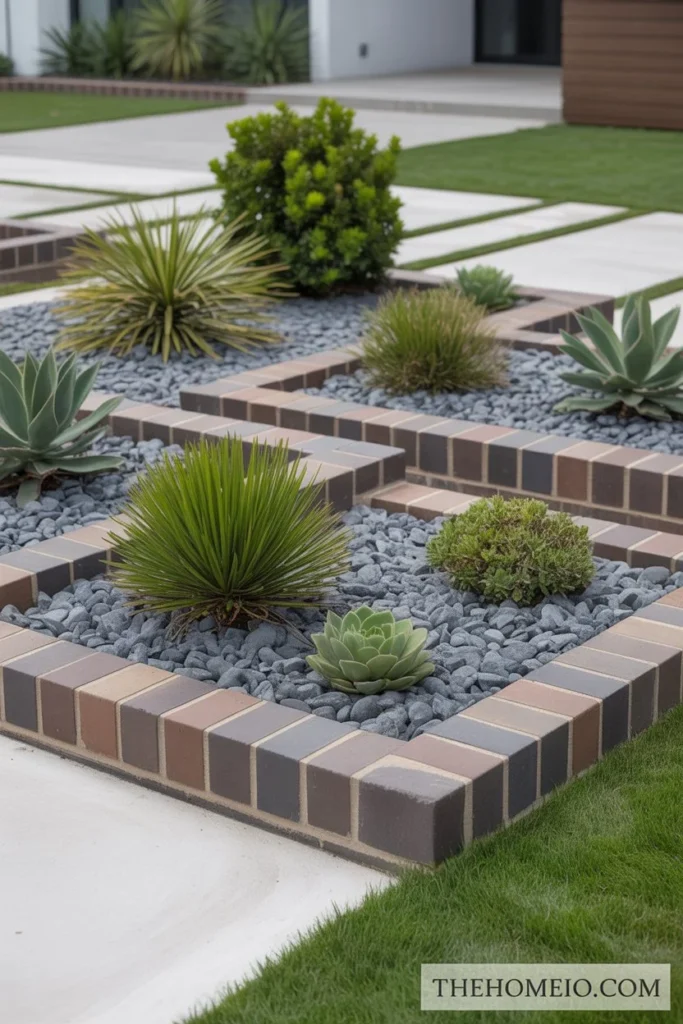
Bricks do not have to work alone.
Combining brick edging with decorative gravel creates a cleaner, more contemporary landscape design while reducing maintenance and adding texture.
This approach fits many modern landscape edging ideas.
12. Frame the Entire Front Yard Landscape
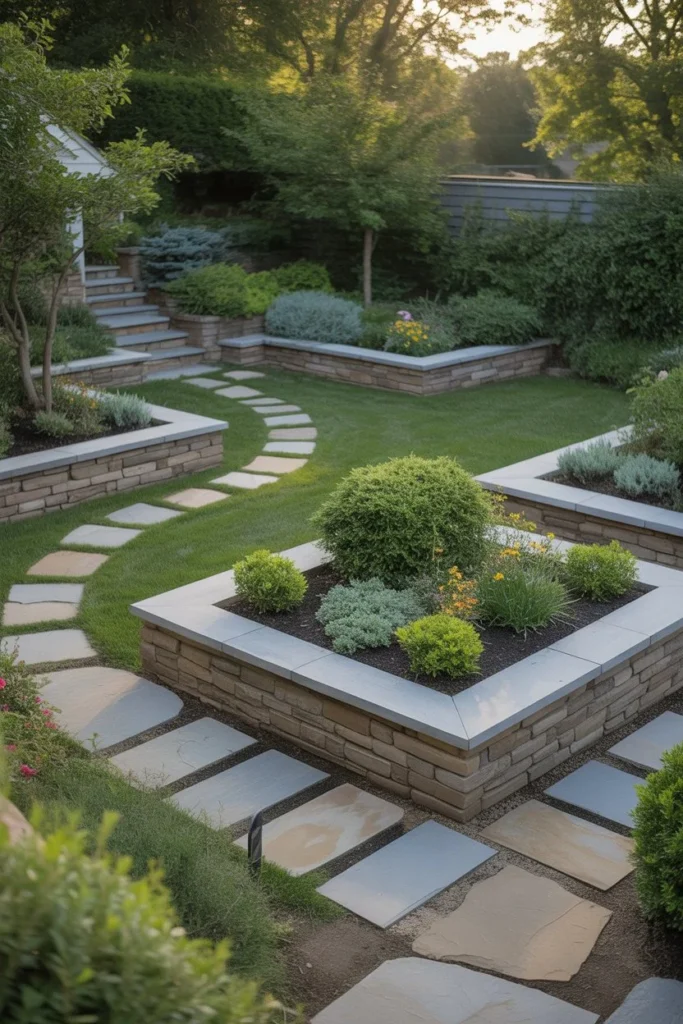
One of the most dramatic upgrades is the use of brick edging throughout the front yard.
Connecting flower beds, trees, pathways, and lawn areas with a consistent brick border creates a cohesive landscape design that immediately boosts curb appeal and home value.
This larger-scale approach makes the entire yard feel professionally designed.
🧱 BASIC DIY INSTALLATION STEPS
Before starting any DIY brick border garden edging project:
Step 1
Mark the border using landscape paint or a garden hose.
Step 2
Dig a trench slightly wider than the bricks.
Step 3
Add and compact a base layer of sand.
Step 4
Level the bricks carefully as you install them.
Step 5
Fill gaps with sand and compact again.
Step 6
Backfill soil or mulch along the finished edge.
Taking time during installation helps prevent shifting later.
Final Thoughts
Brick edging is one of the simplest landscaping projects with the biggest visual payoff.
Whether you choose a traditional flat border, a decorative herringbone pattern, or a raised garden edge, brick borders create cleaner lines, improve organization, and add timeless charm to outdoor spaces.
With the right design and proper installation, a brick border can make an ordinary garden look professionally landscaped for years to come.
FAQ’s
1. What is the easiest way to lay brick garden edging?
Laying bricks flat in a shallow sand-filled trench is usually the easiest and most beginner-friendly method.
2. Do you need mortar for brick garden edging?
No. Most DIY brick edging projects use compacted sand instead of mortar.
3. How deep should brick edging be installed?
Typically 2 to 4 inches below grade, depending on the brick size and desired appearance.
4. Are bricks good for landscape edging?
Yes. Bricks are durable, affordable, low-maintenance, and suitable for many landscaping styles.
5. How do you stop brick edging from moving?
A compacted base, proper leveling, and backfilling around the bricks help keep edging stable.