
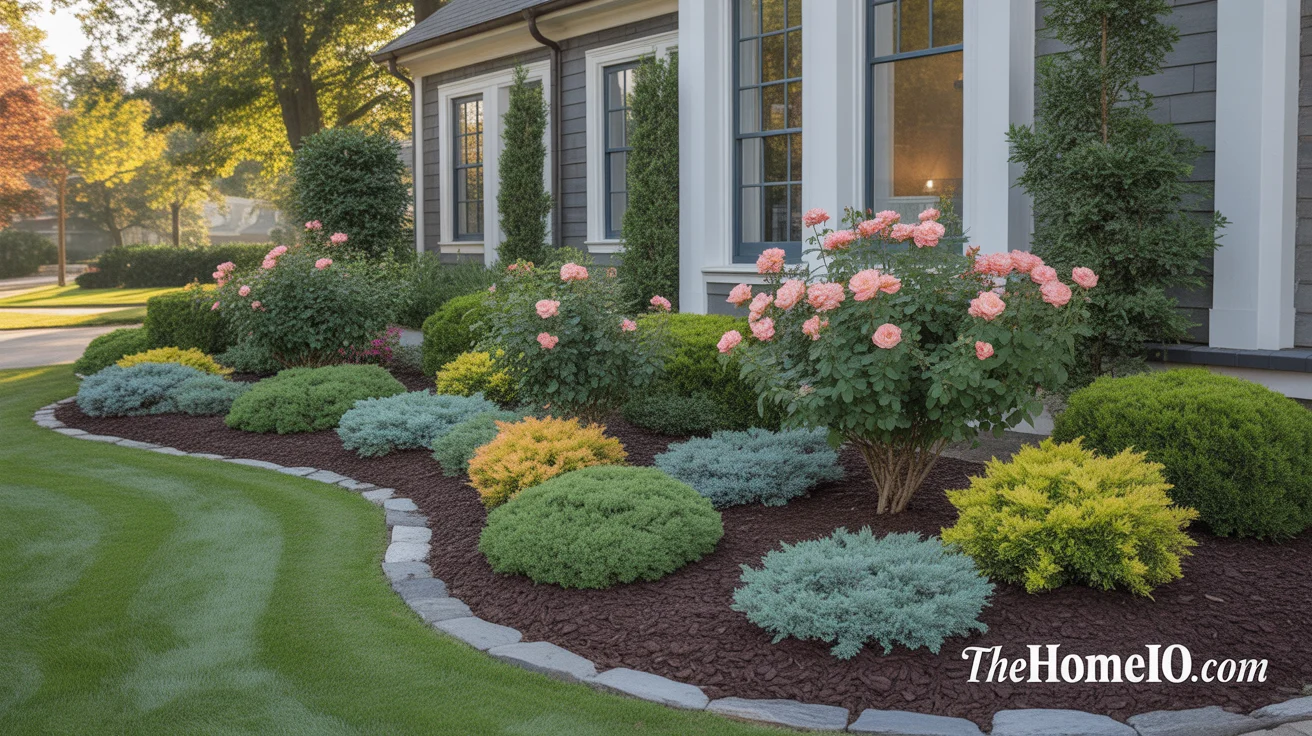
Nobody wants to spend every summer weekend hacking back shrubs that have taken over the front of the house. And nobody wants plants that creep up the siding, swallow the windows, or turn a tidy front yard into something that looks abandoned.
Low-growing shrubs solve all of that. They stay compact, they behave themselves, and when you pick the right ones, they look genuinely beautiful without demanding constant attention. Whether you want evergreen structure, seasonal blooms, bold foliage color, or a mix of all three, there is a low-growing shrub on this list that will work perfectly for your front yard.
1. Dwarf Mugo Pine: Rugged, Reliable, and Always Green
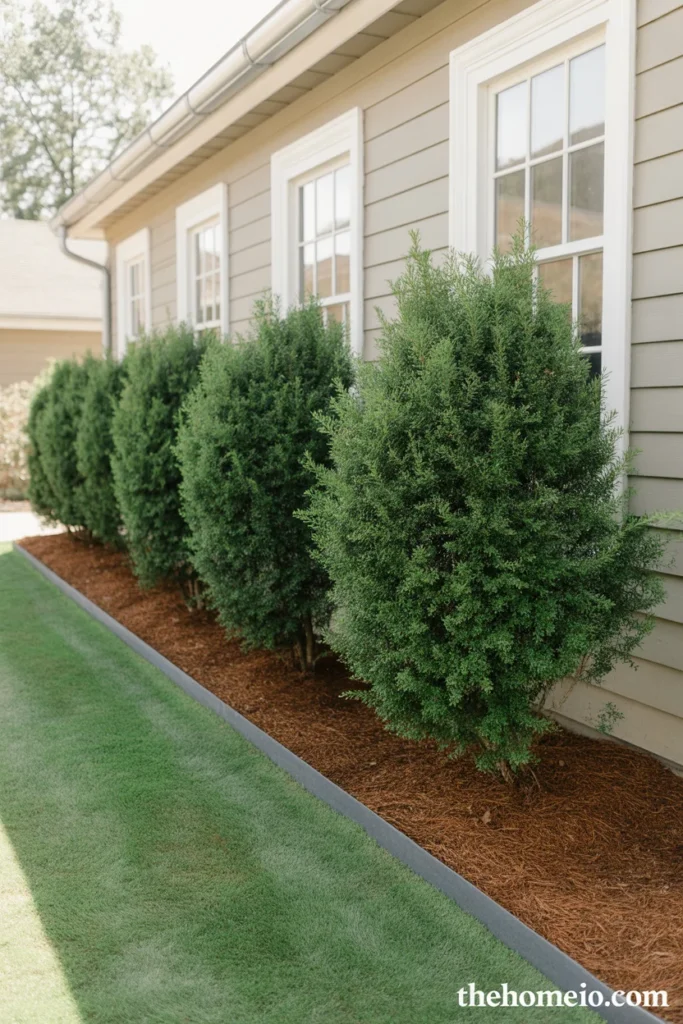
The Dwarf Mugo Pine is one of those low-growing shrubs that earns its keep every single month of the year. It stays naturally compact, usually two to four feet tall and wide, with dense, dark green needles that hold their rich color through even the harshest winters.
It needs almost no pruning, handles full sun and poor soil without complaint, and has a chunky, architectural quality that looks sharp in a modern or traditional front yard setting. Plant it as a standalone accent or use a row of them along the foundation as a low-profile evergreen border. As one of the best low-growing evergreen shrubs for the front of the house, it is practically impossible to kill, which is always a bonus.
2. Drift Rose: Low, Blooming, and Completely Carefree
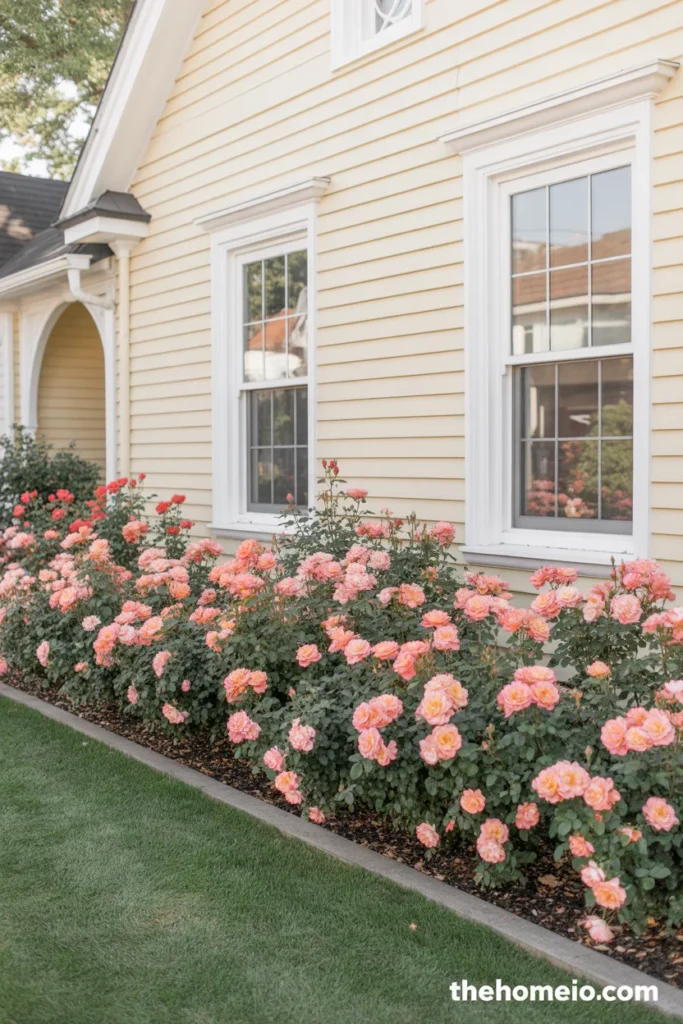
If you want color from spring all the way through fall without deadheading, spraying, or fussing, Drift Roses are exactly what you have been looking for. These compact little roses max out at around two feet tall and spread to about three feet wide, making them one of the most perfectly sized low-growing flowering shrubs for the front yard.
They come in coral, red, pink, peach, white, and yellow. They are disease resistant. They bloom in waves all season long. And planted in a group of three or five along the front foundation, they create a ribbon of continuous color that looks like it came straight out of a magazine spread.
3. Blue Star Juniper: Cool Tones That Make a Quiet Statement
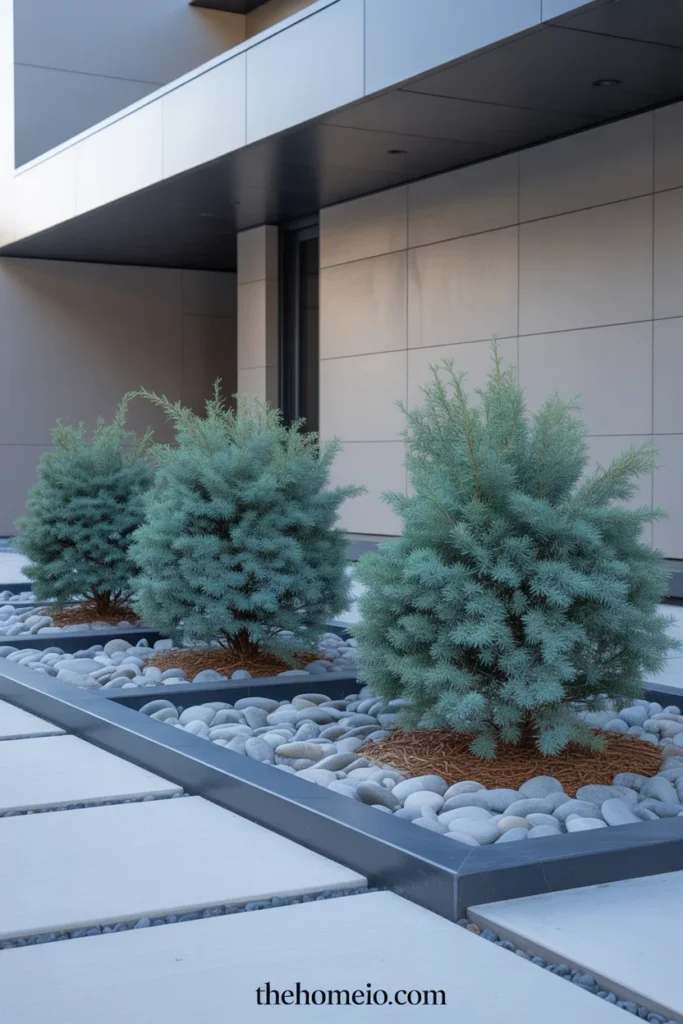
Most low-growing shrubs play it safe with green. Blue Star Juniper does something different. Its silvery blue foliage has a cool, almost metallic quality that catches morning light beautifully and creates a visual pause in any landscape.
It grows slowly into a tight, rounded mound, usually no more than three feet tall, and holds its color and shape year-round without any trimming. It is drought tolerant, deer resistant, and handles full sun without missing a beat. For a front yard that leans modern, minimal, or cool-toned, Blue Star Juniper is one of those small compact shrubs for foundation planting that always looks quietly impressive.
4. Magic Carpet Spirea: A Tiny Shrub With a Big Personality
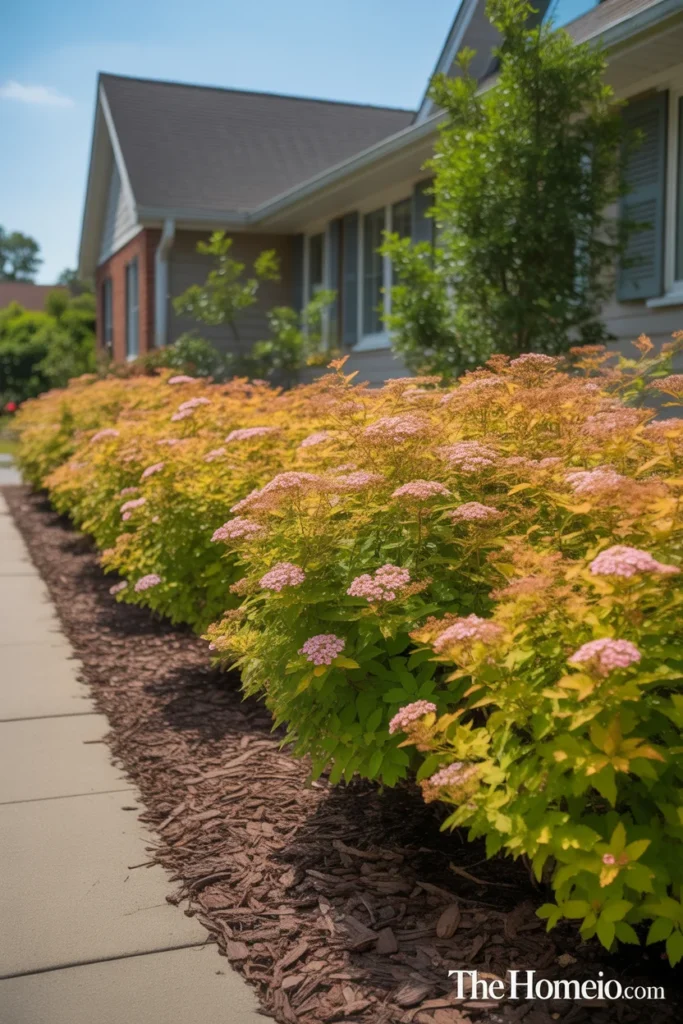
Do not let the small size fool you. Magic Carpet Spirea packs more visual interest into two feet of height than most shrubs manage at twice the size. The foliage starts out bright red in spring, shifts to golden yellow through summer, and turns orange-red again in fall. In between all of that, it covers itself in tiny pink flowers in early summer.
It is one of the most colorful low-growing shrubs you can plant in a front yard, and it earns that color through every single season. Mass plant it along the foundation for a living tapestry effect, or use it as a low border along the front walkway. Either way, it always looks intentional and alive.
5. Dwarf Fountain Grass: Soft Movement and Natural Texture
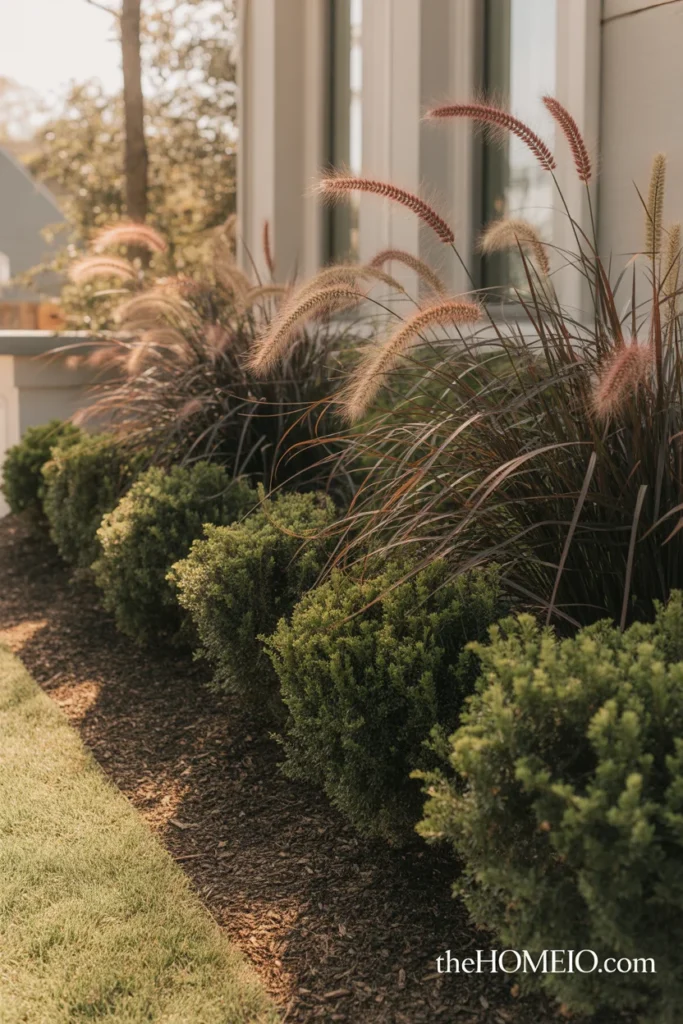
Not everything in a front yard has to be stiff and structured. Dwarf Fountain Grass brings something softer to the mix, graceful, arching blades that move gently in the breeze and feathery seed heads that catch the light in late summer and fall.
It stays compact at two to three feet tall and wide, which makes it one of the most window-friendly shrubs you can use along the front foundation. The burgundy variety, called Hameln or Red Riding Hood, adds rich color that looks especially stunning next to lighter colored house exteriors. Use it between more structured evergreens for a textural contrast that feels designed and intentional.
6. Incrediball Hydrangea: Big Blooms on a Better-Behaved Plant
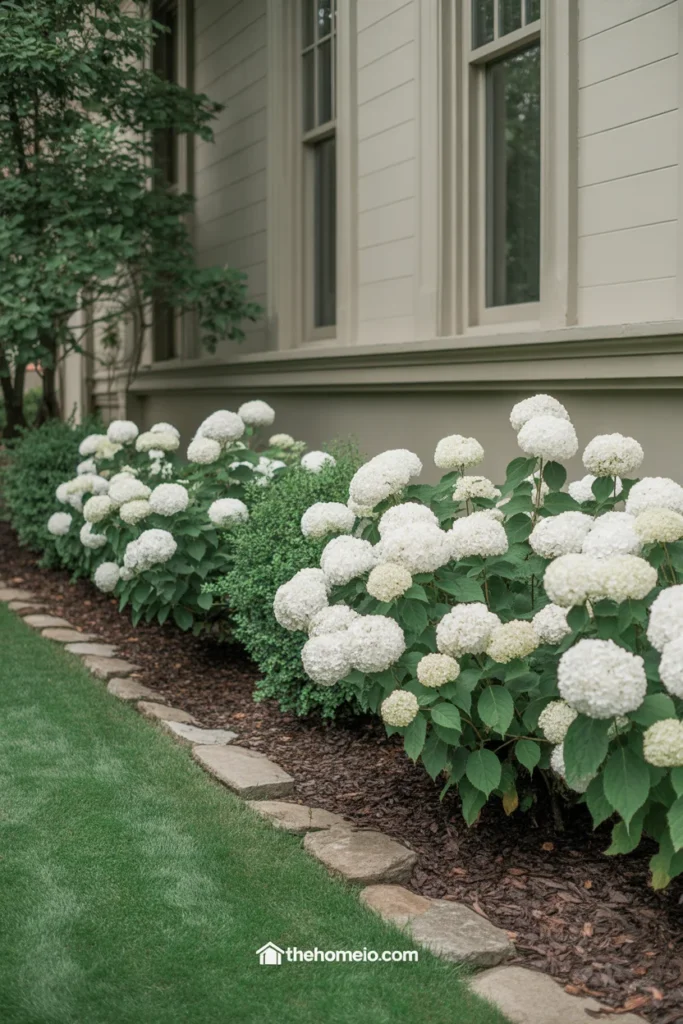
Standard hydrangeas can get big fast. Incrediball Hydrangea gives you those same enormous white globe blooms on a much more manageable plant that stays around four feet tall and wide, perfectly sized for front of house planting without overwhelming the space.
The blooms are genuinely massive, sometimes the size of a volleyball, and they emerge white in summer before gradually shifting to a soft sage green as fall approaches. For a low-growing flowering shrub that makes a truly dramatic statement without taking over the whole yard, Incredible Hydrangea hits a sweet spot that very few plants can match.
7. Moonshine Yarrow: Sun Loving Color That Almost Takes Care of Itself
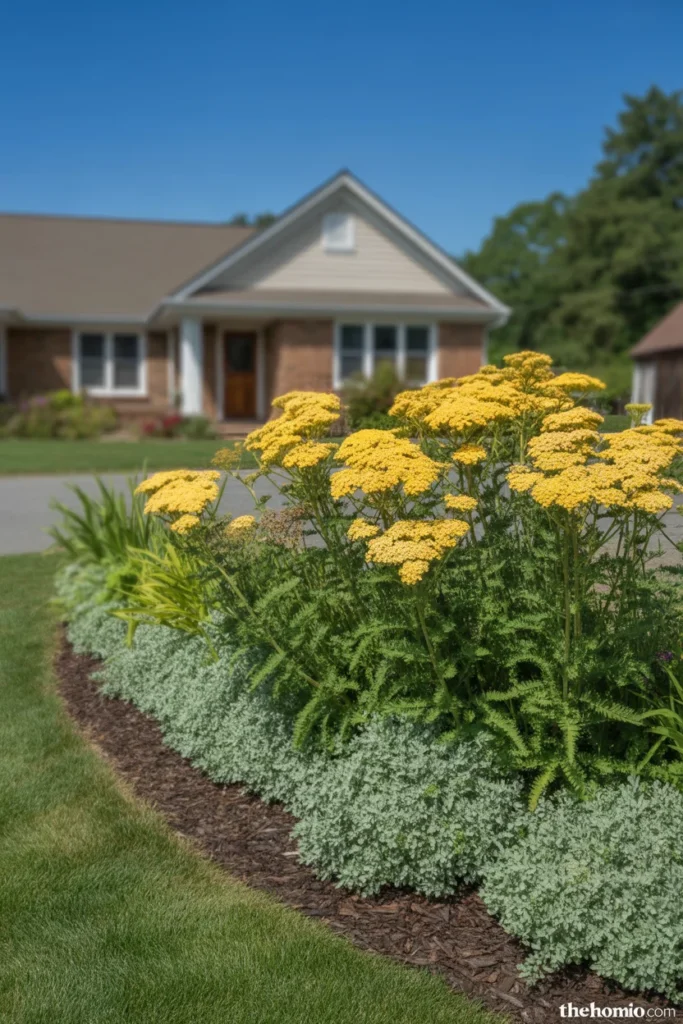
Yarrow is one of those plants that experienced gardeners quietly swear by. Moonshine Yarrow in particular is a standout, it produces flat-topped clusters of bright sulfur yellow flowers on silvery green ferny foliage from late spring through much of summer, and it does all of this in full sun with minimal water.
It stays at around two feet tall, spreads gradually into a tidy clump, and comes back reliably every year as a tough perennial. It is drought tolerant, deer resistant, and genuinely one of the most low maintenance front yard shrubs you can plant. For a hot, sunny front yard that needs reliable color without constant watering, Moonshine Yarrow is a quiet hero.
8. Dwarf Burning Bush: Fall Color That Stops People in Their Tracks
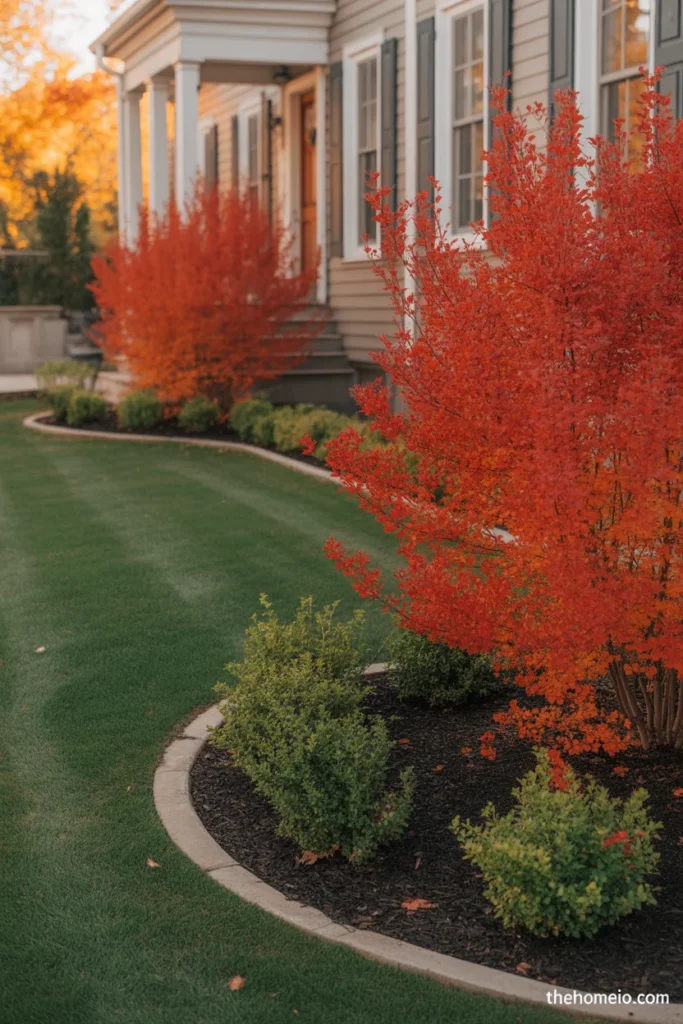
For most of the year, Dwarf Burning Bush is a pleasant, well-behaved compact green shrub. Nothing too flashy. Then October arrives and it transforms into one of the most vivid displays of fall color in any front yard, a blazing, electric scarlet red that genuinely looks like it is on fire from the street.
The dwarf variety stays at three to four feet, which makes it manageable and window-safe, unlike its larger cousins. Use it as a bold accent at the corners of the foundation or plant several in a row for a fall color display that makes the whole front yard look like an editorial photo shoot. For seasonal drama on a compact scale, nothing beats it.
9. Creeping Juniper: The Low Maintenance Ground Hugger
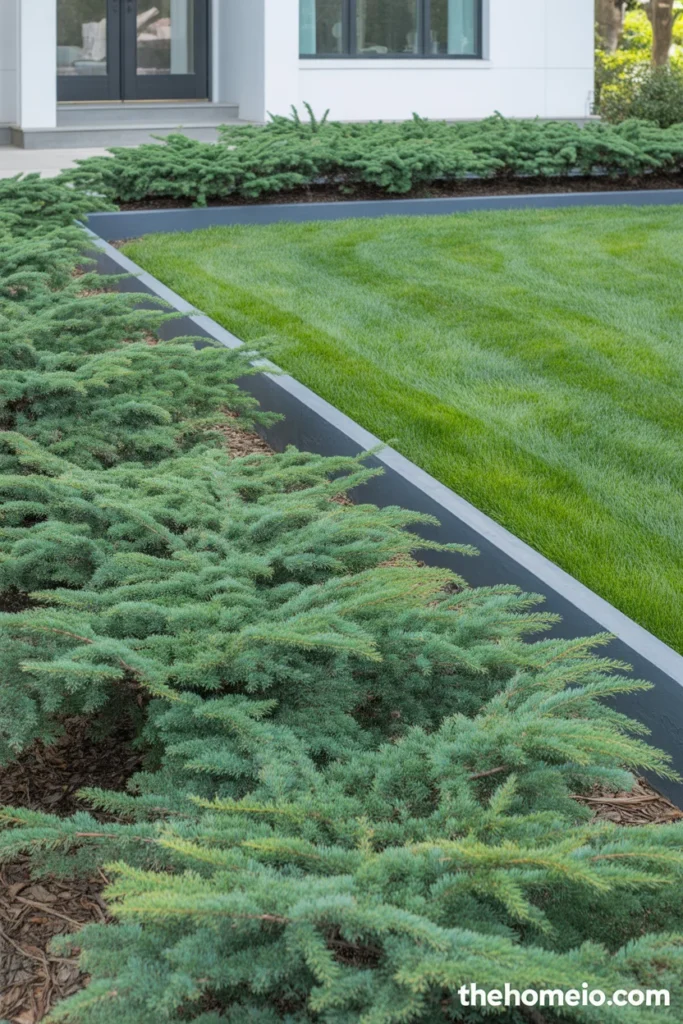
If you have a slope, a hard-to-mow strip, or a wide open bed at the front of the house that needs filling without going vertical, Creeping Juniper is your answer. It spreads wide and stays extremely low, usually under two feet tall with dense blue-green foliage that turns plum-toned in winter.
It is one of the toughest, most drought tolerant low-growing shrubs available. It chokes out weeds, holds soil on slopes, and handles full sun without any complaints. As a ground-level foundation planting that covers space beautifully without ever threatening a window, Creeping Juniper delivers year-round utility and quiet good looks in equal measure.
10. Little Henry Sweetspire: Native Charm With Four-Season Interest
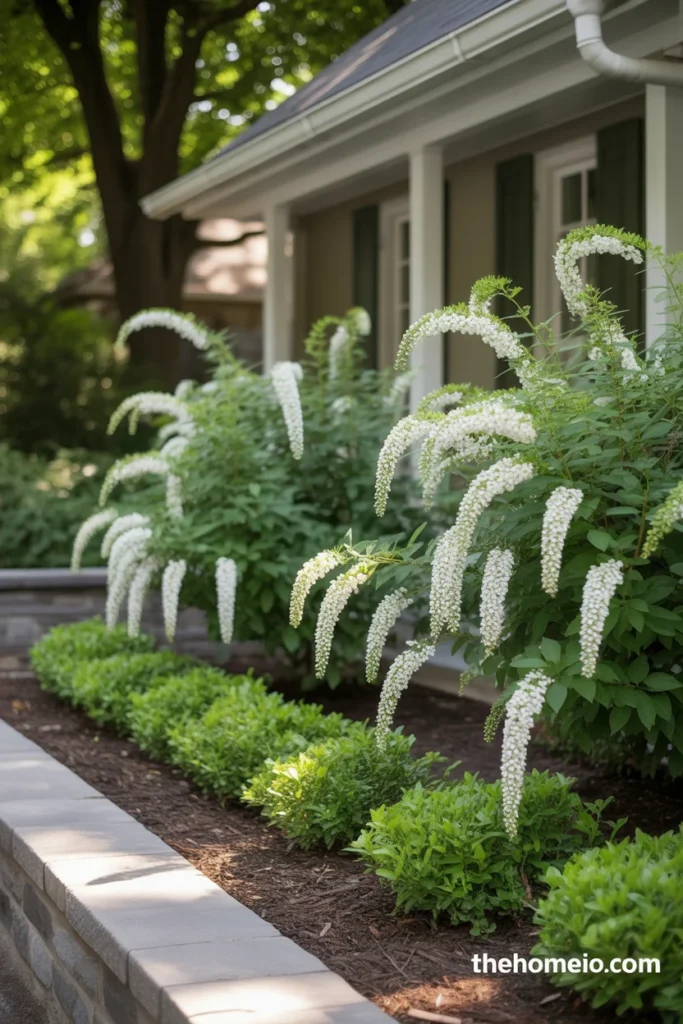
Little Henry Sweetspire is a native shrub that punches well above its compact size in terms of year-round interest. In early summer it produces long, arching white flower spikes that smell lightly sweet. Through summer the foliage is clean and full. In fall it turns brilliant shades of orange, red, and burgundy. And even through winter the arching form adds structure to the bare landscape.
It tolerates part shade, handles moist soil well, and stays at around two to three feet tall, making it one of the best small compact shrubs for foundation planting in shadier or wetter front yard conditions. It is also native, which means it supports local pollinators and thrives naturally in American growing conditions.
11. Loropetalum: Rich Color That Works All Year
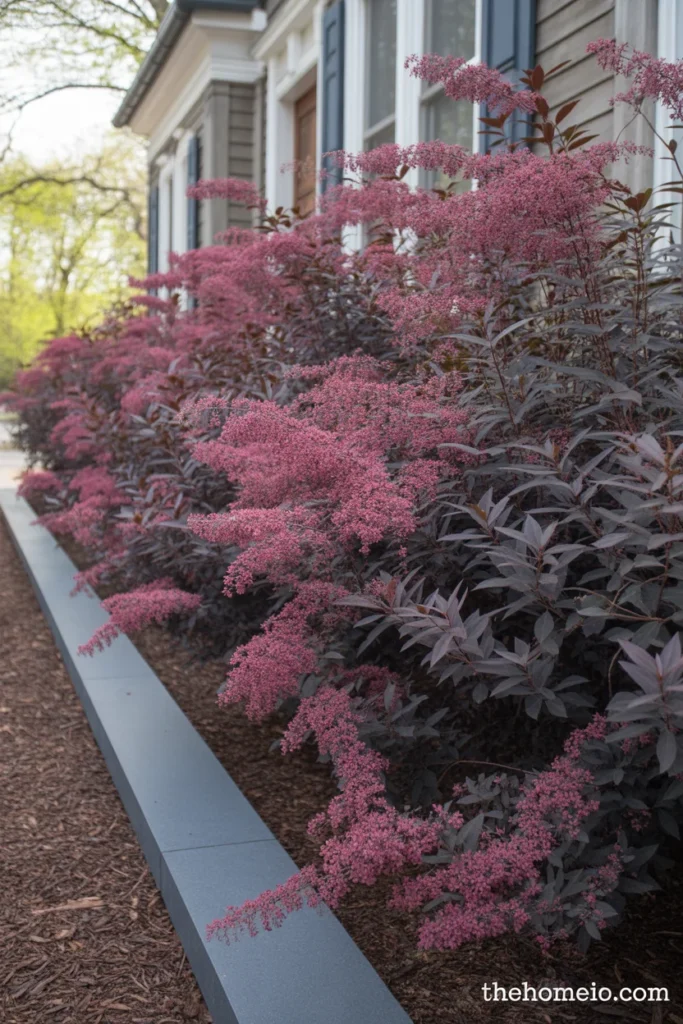
Loropetalum wraps up this list because it genuinely deserves the closing spot. The deep burgundy to purple foliage is rich and dramatic every single month of the year, not just during bloom time. And when spring arrives, those hot pink fringy flowers burst open against the dark leaves in a combination that is genuinely hard to look away from.
Dwarf varieties like Purple Pixie stay low and wide, often under two feet tall but spreading to four feet, making them perfect for front foundation planting where you need coverage without height. They handle full sun to partial shade, stay semi-evergreen in most US climates, and require almost no pruning to maintain their graceful, mounding form. For a low-growing shrub that delivers color, texture, and drama across all four seasons, Loropetalum is in a class of its own.
The Right Height Makes All the Difference
There is something genuinely satisfying about a front yard where all the plants are exactly the right size. The windows are clear. The foundation is covered. The house looks grounded and finished. And not a single weekend was wasted hacking back something that outgrew its space.
That is what low-growing shrubs do for a front yard. They give you all the beauty and structure of a fully landscaped home without the maintenance headaches that come with plants that were never right for the space in the first place.


2 thoughts on “11 Low-Growing Shrubs for the Front of Your House That Look Great All Year”