
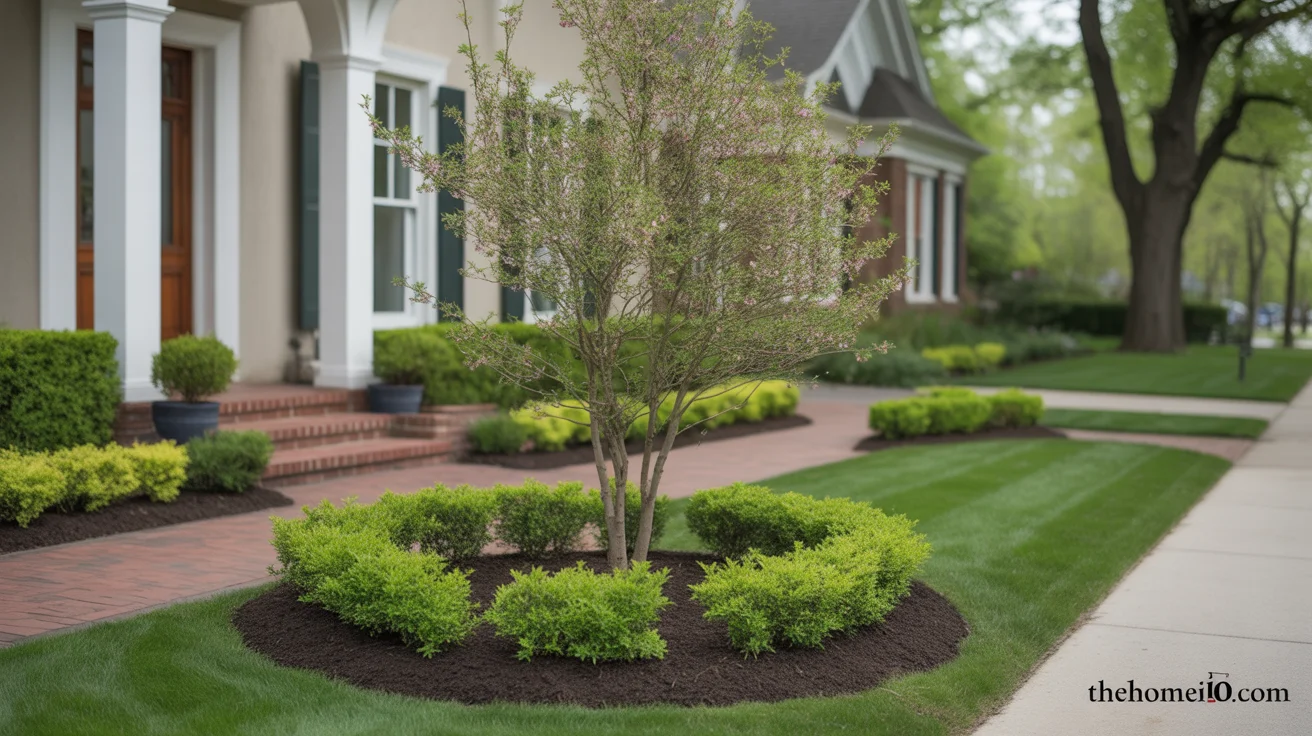
10 Small Front Yard Trees with Relatively Non-Aggressive Roots
The best front yard tree does more than look pretty. It also has to fit the space. That is why smaller ornamentals are usually the safer choice near walkways, driveways, and homes. Extension guidance is pretty clear on this point. Smaller trees are less likely to grow roots large enough to cause the same level of trouble as bigger shade trees, but they still need proper spacing and soil room.
If you are choosing from small trees with non-invasive roots, think in practical terms. Look for trees that stay under about 30 feet, avoid very aggressive fast growers, and match the site conditions you actually have. The trees below are good front-yard options because they stay relatively compact and are commonly recommended for smaller residential spaces.
1. Japanese Maple For Small Front Yard Trees
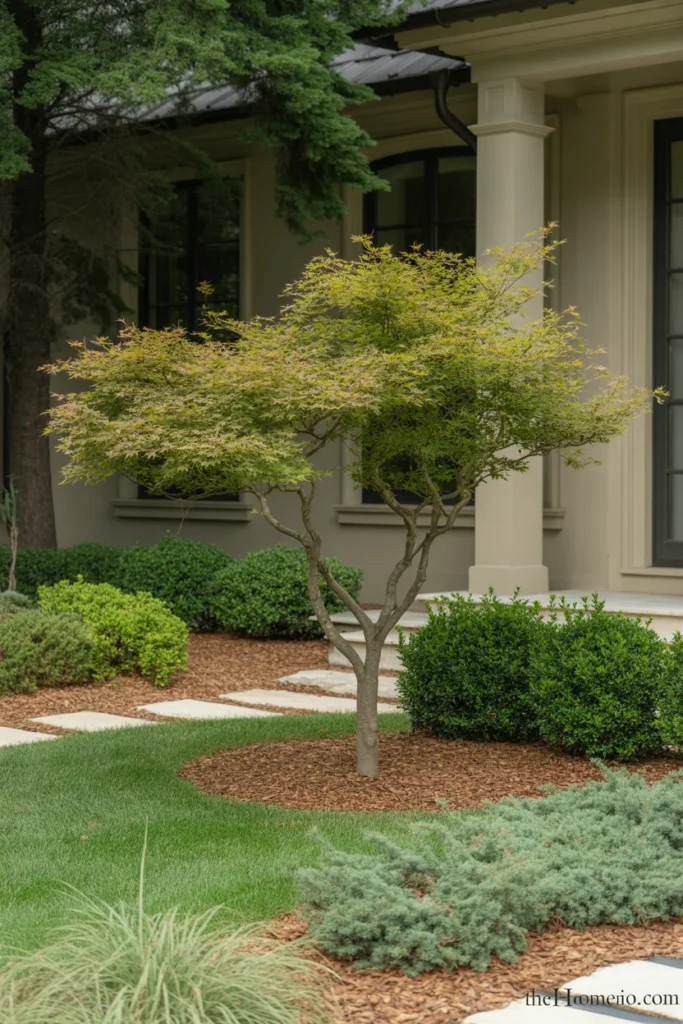
Japanese maple is one of the easiest small trees to use in a front yard. It usually stays in the 10 to 25 foot range, and many cultivars stay even smaller. It also has a graceful shape that works well near entry paths and foundation beds. NC State describes it as a prized specimen tree and notes that it grows best in dappled shade with moist, well-drained soil.
This is a strong choice if you want something elegant and refined. It is especially good where you want curb appeal without a large canopy.
2. Eastern Redbud For Small Front Yard Trees
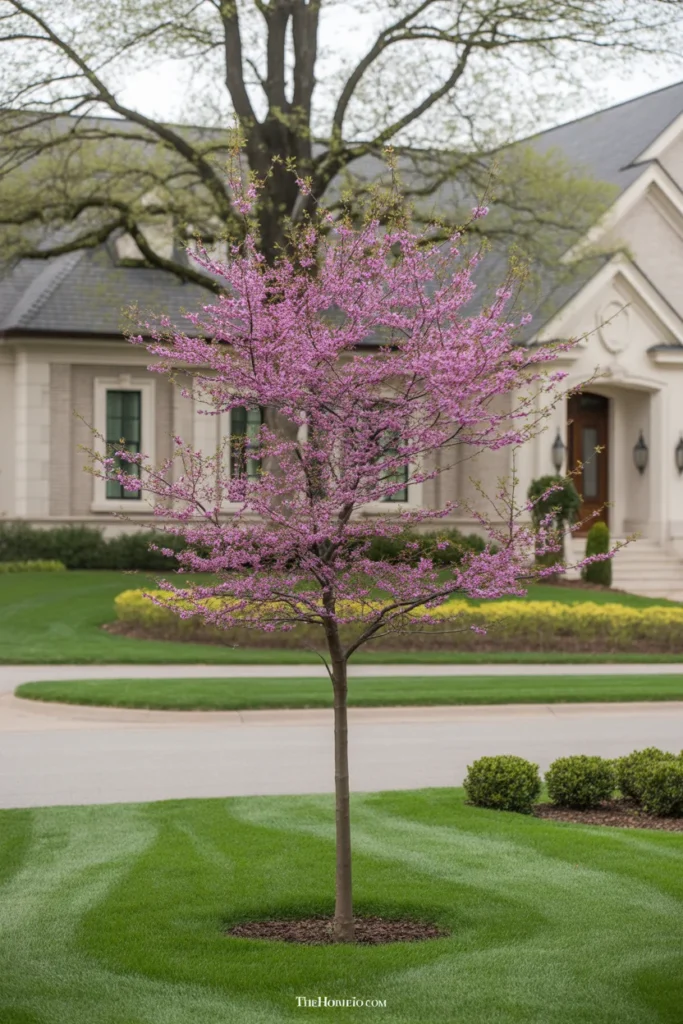
Eastern redbud is a classic small ornamental tree. NC State lists it at about 20 to 30 feet tall and says it grows in full sun to partial shade. It flowers early, looks good in natural-style front yards, and fits well in smaller residential spaces.
It is one of the best choices if you want spring color and a native look without planting a much larger shade tree.
3. Serviceberry For Small Front Yard Trees
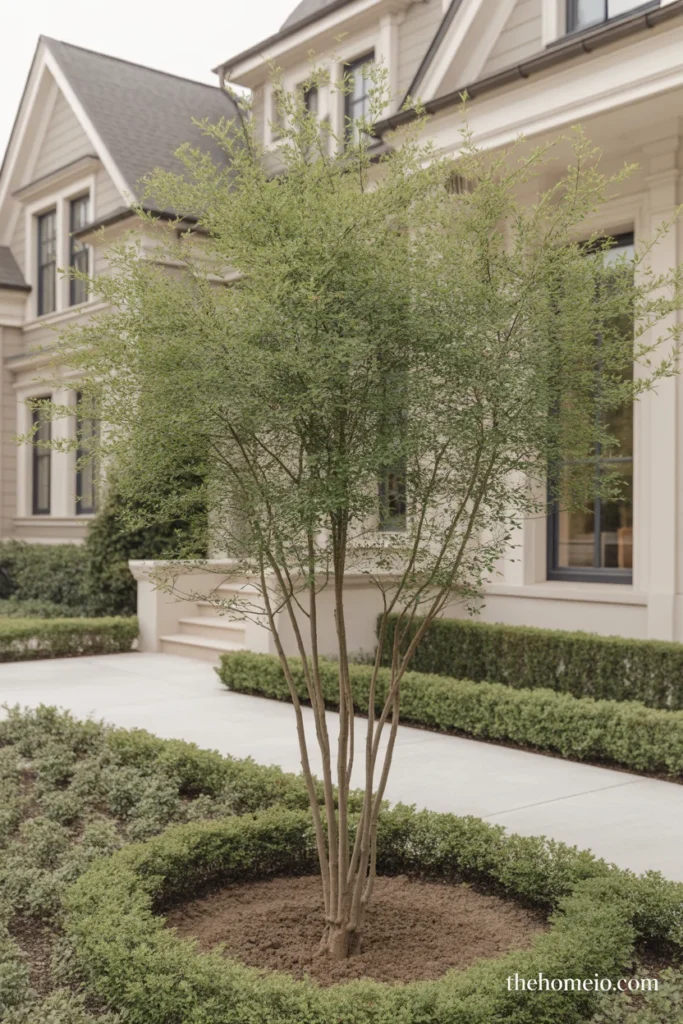
Serviceberry is a great front-yard tree because it brings flowers, berries, and fall color in one plant. Depending on the species or cultivar, it often matures in the 15 to 25 foot range. NC State notes that serviceberries do best in full sun or partial shade and that some forms may send up suckers, so occasional shaping helps keep a cleaner tree form.
This is a very good pick if you want a softer, more natural front-yard look.
4. Fringetree
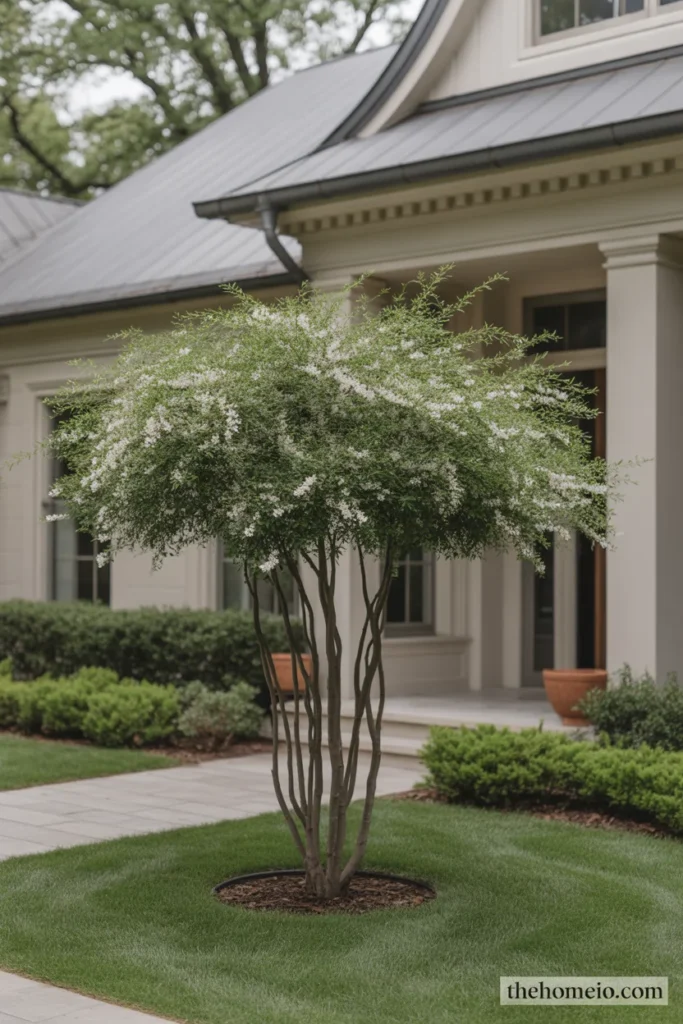
Fringetree stays nicely compact for most home landscapes. NC State says it generally grows 12 to 20 feet tall and wide and can be trained as a single-trunk tree. It also grows slowly, which is useful in a front yard where you do not want a tree to outgrow its spot too quickly.
It is a smart choice if you want something unusual but still manageable.
5. Flowering Dogwood
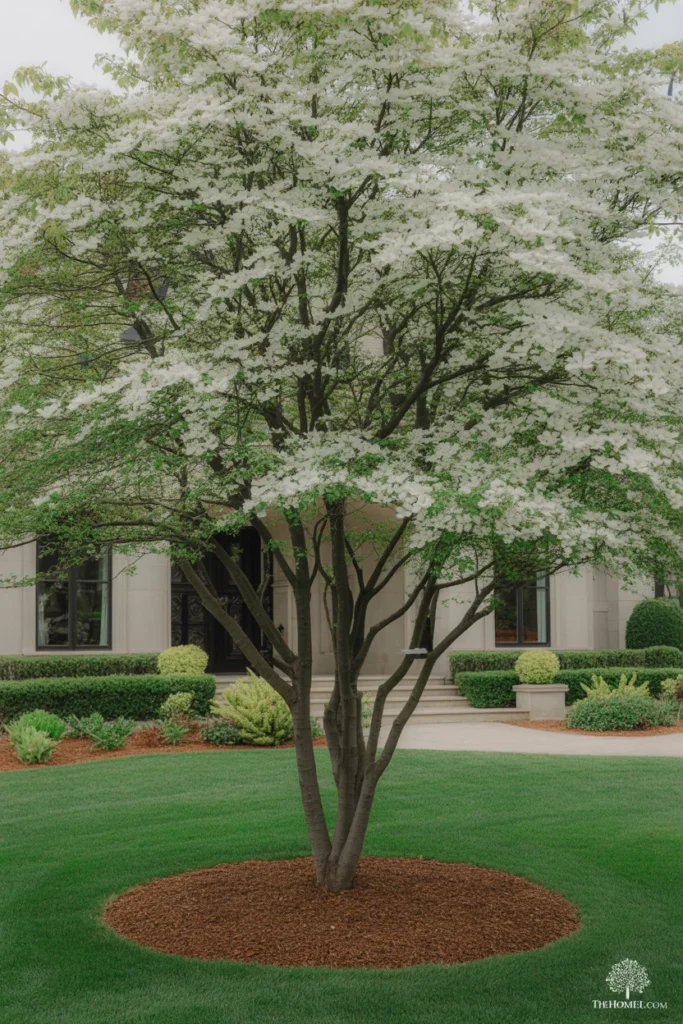
Flowering dogwood remains one of the best small front yard trees in many parts of the U.S. NC State lists it at 15 to 25 feet tall and says it can grow in full sun to partial shade. Missouri Extension even notes that small trees such as flowering dogwood may be planted as close as 6 feet from the house in some home landscapes.
That does not mean crowd it into a bad spot, but it does show why this tree is so often used near homes.
6. Kousa Dogwood
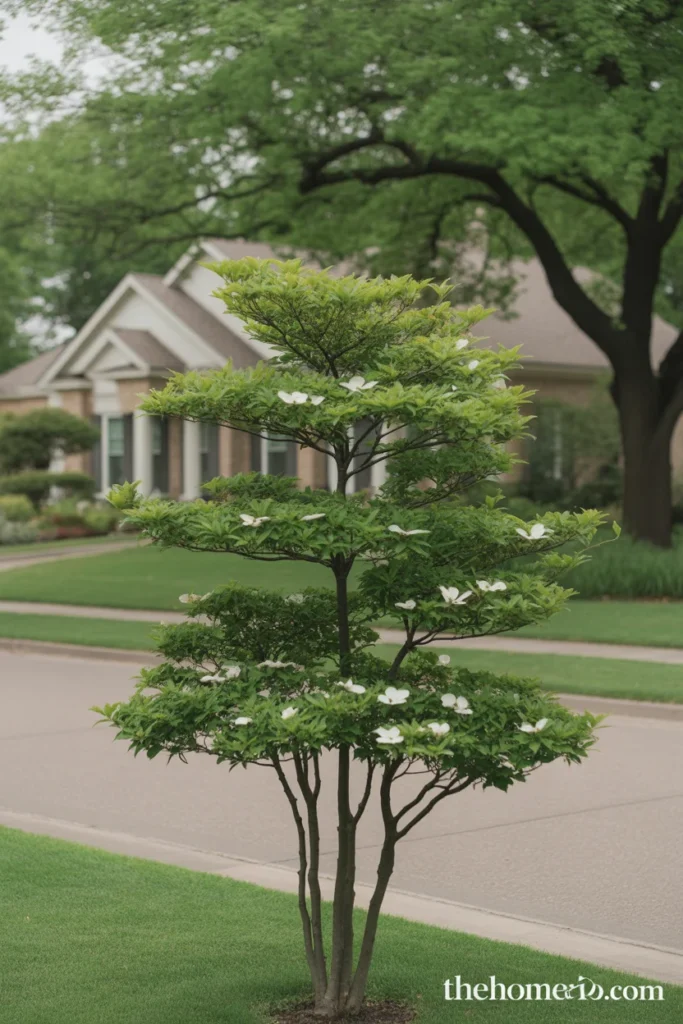
Kousa dogwood is another strong front-yard option. NC State describes it as a small- to medium-sized tree that can reach about 30 feet, with full sun to partial shade exposure. It gives you a similar dogwood look but with a slightly different bloom and branching style.
This is a good choice if you want a dogwood look but with a slightly different seasonal effect than native flowering dogwood.
7. Star Magnolia
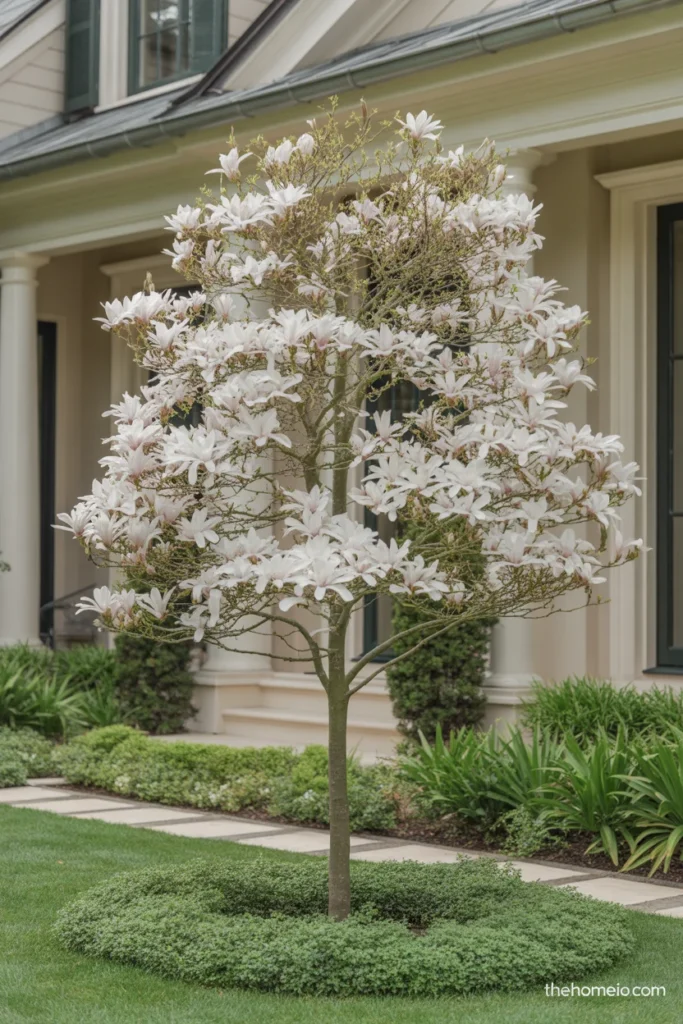
Star magnolia is one of the better choices for smaller front yards because it usually stays around 15 to 20 feet tall and 10 to 15 feet wide. NC State says it flowers best in full sun, though it will tolerate some partial shade.
It works especially well where you want a softer ornamental tree with early spring flowers and a more compact footprint.
8. Magnolia ‘Jane’
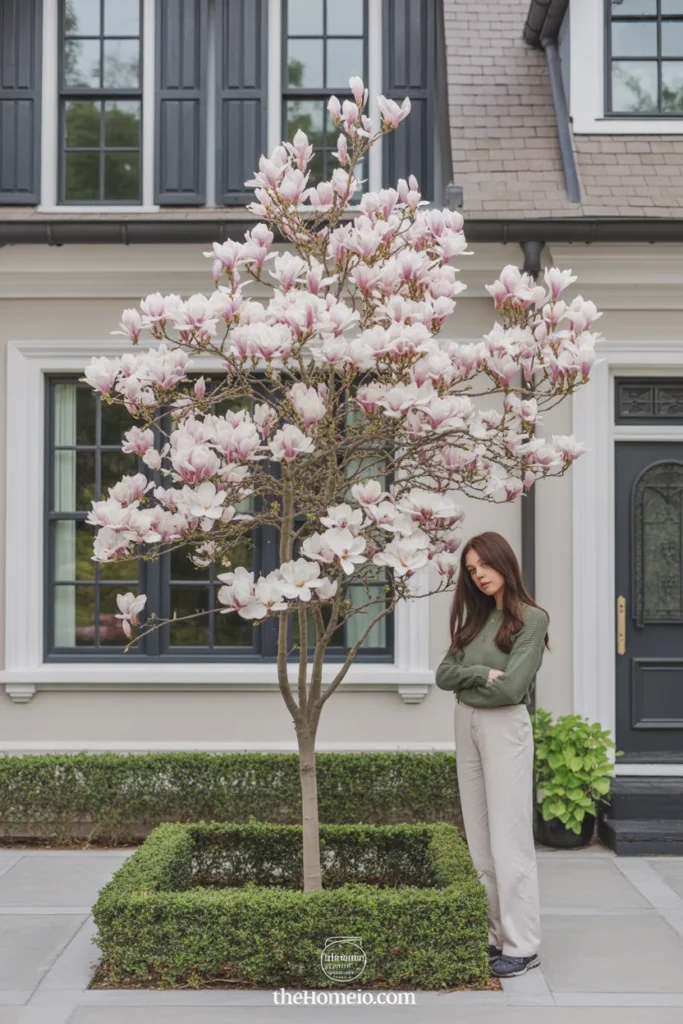
If you want something even more compact, ‘Jane’ magnolia is a strong option. NC State says it grows to around 15 feet tall and 12 feet wide and specifically notes that it works well in small spaces and even along foundations. It can grow in full sun to partial shade.
This is one of the easiest flowering trees to place in a tighter front yard.
9. Chinese Tree Lilac
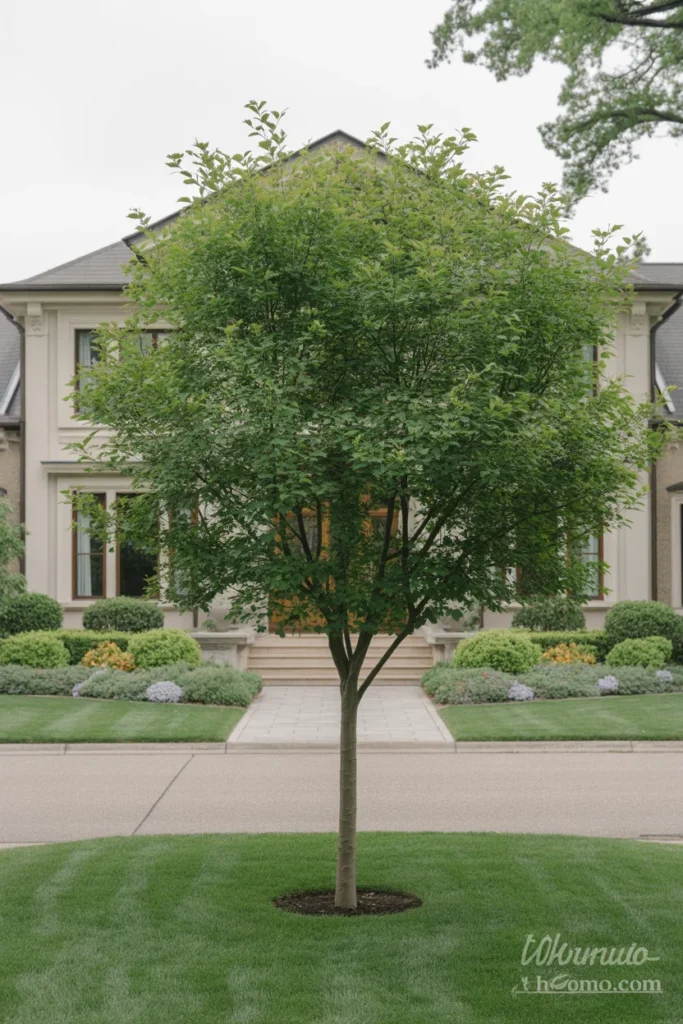
Chinese tree lilac is a very practical front-yard tree because it stays in the 15 to 20 foot range with a spread around 10 to 15 feet. NC State says it should be planted in full sun for best flowering and disease resistance.
If you want something upright and a little less common than dogwood or redbud, this one is worth a look.
10. Disease-Resistant Crabapple
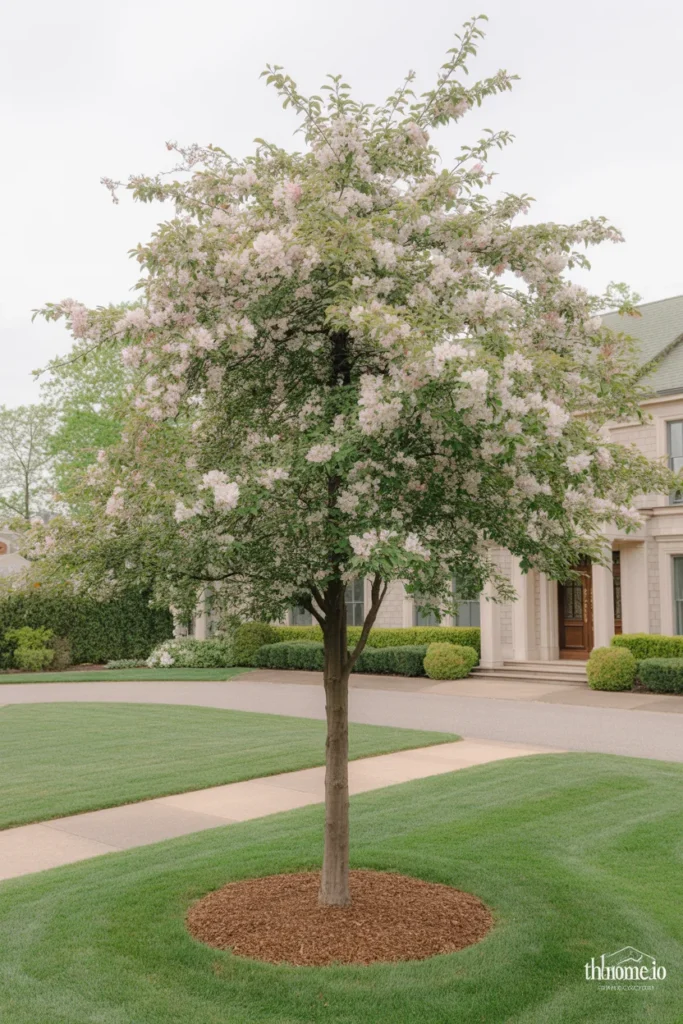
A good crabapple cultivar can work very well in a front yard. NC State lists the disease-resistant ‘Royal Raindrops’ cultivar at about 20 feet tall with a 16 foot spread, and says it performs best in full sun with good drainage.
This is a nice choice if you want spring flowers and a more classic ornamental tree shape without moving up to a large tree.
Final Thoughts
If you are shopping for small trees with non-invasive roots, the real goal is not to find a magic root system. The goal is to choose a compact ornamental tree that matches the size of the site, then give it enough room from the start. Smaller trees are less likely to create the same hardscape problems as large aggressive species, but planting distance still matters.
For most front yards, Japanese maple, redbud, serviceberry, fringetree, dogwoods, compact magnolias, Chinese tree lilac, and smaller crabapple cultivars are much safer bets than fast-growing large trees. Before planting, double-check your USDA zone, sun exposure, and mature size, then give the tree enough open soil so its roots are not forced into pavement and foundations.


One Comment