
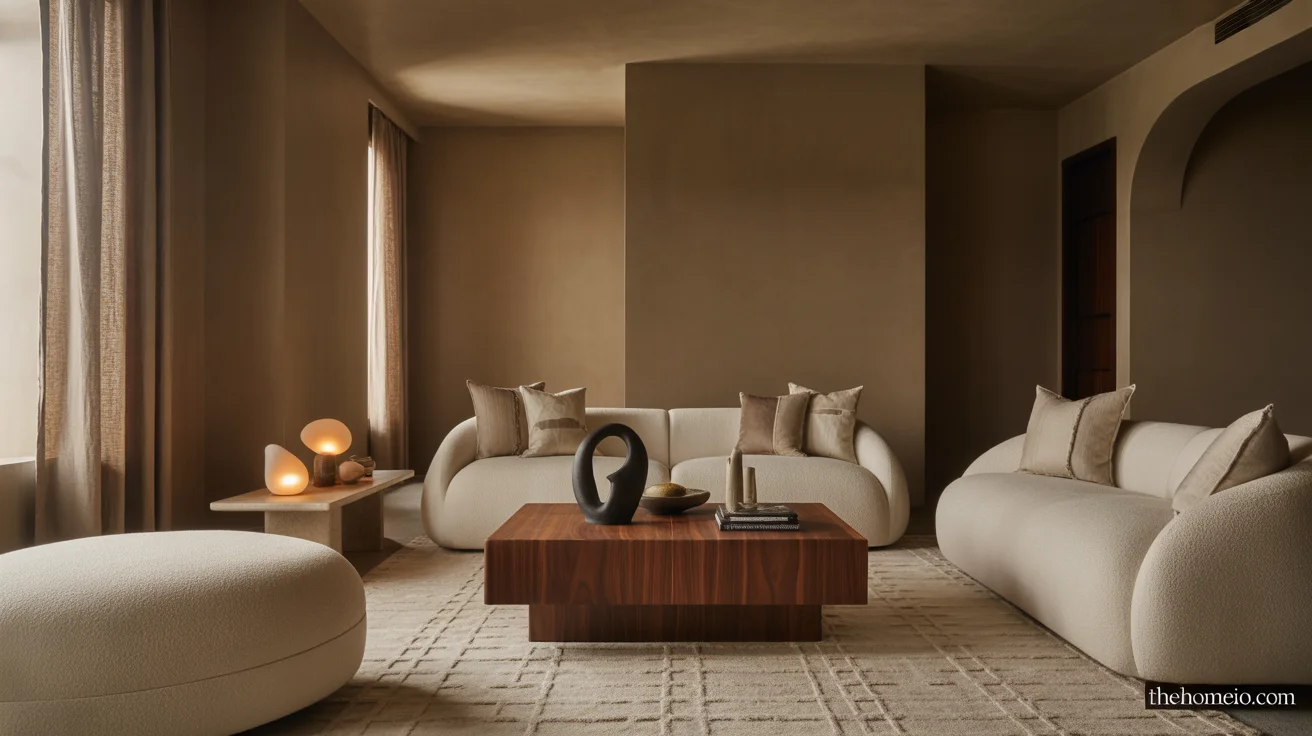
How to Make a Living Room Feel Moody and Neutral at the Same Time
A moody room does not have to be dramatic in a loud way, and a neutral room does not have to feel flat. The best spaces sit right in the middle. They feel warm, layered, a little darker, and very calm. That is the real answer to how to get your living room both moody and neutral.
This look works best when the room feels rich without feeling heavy. Current design coverage points in exactly that direction: moodier living spaces are gaining ground, while neutral palettes are getting warmer, deeper, and more expressive instead of staying pale and plain.
1. Start With a Dark Neutral Base, Not a Harsh One
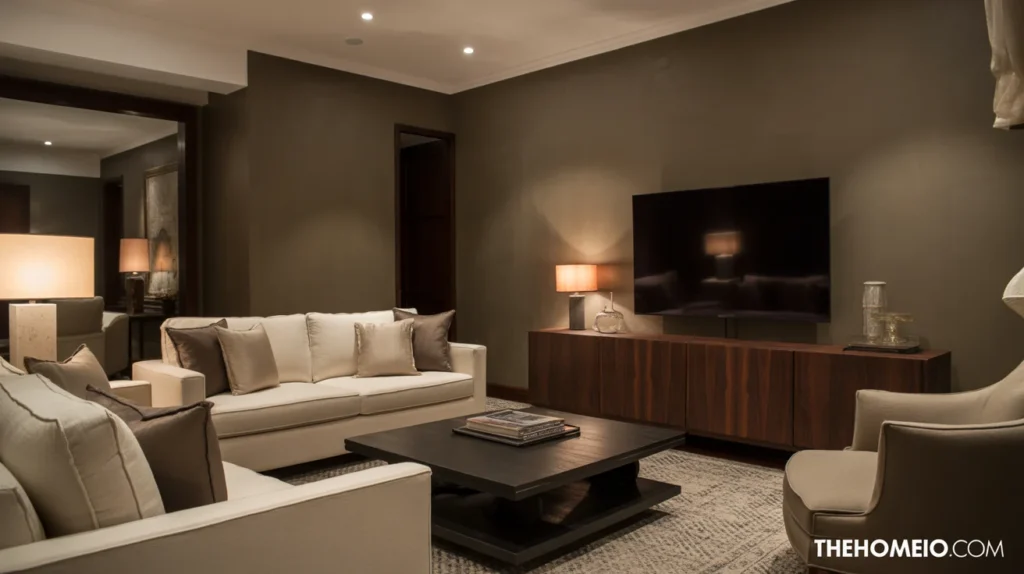
The foundation matters most. A dark neutral living room usually works better with warm charcoal, taupe, brown-gray, mushroom, or smoky olive than with pure black. Those shades bring depth, but they still feel soft enough to live with every day.
This is one of the most important best colors for a moody neutral living room because the wrong dark shade can make the space feel cold instead of cozy. Designer-backed color advice is also leaning toward earthy gray-browns and deep browns for rooms that want mood and warmth at the same time.
2. Bring in Light Neutrals to Keep the Room Open
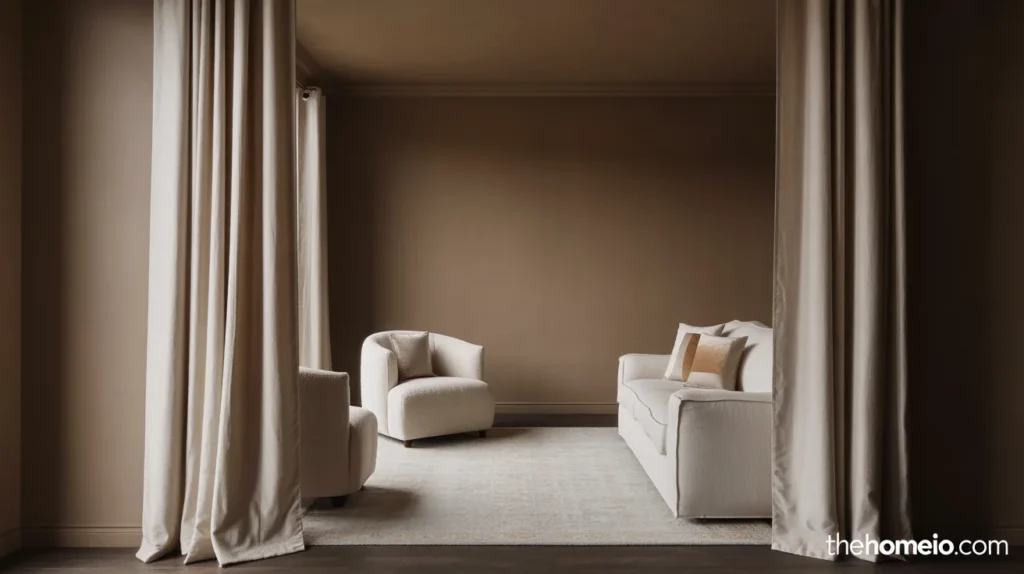
A room gets balance from contrast. Once the darker base is in place, add cream, oatmeal, warm white, sand, or light beige through the sofa, rug, curtains, or larger decor pieces. This is how to balance dark and light tones in a living room without losing the moody feel.
The room should never feel like one flat block of dark color. A little lightness gives the eye somewhere to rest and keeps the space looking elegant instead of overly heavy.
3. Stay Tonal Instead of Mixing Too Many Unrelated Shades
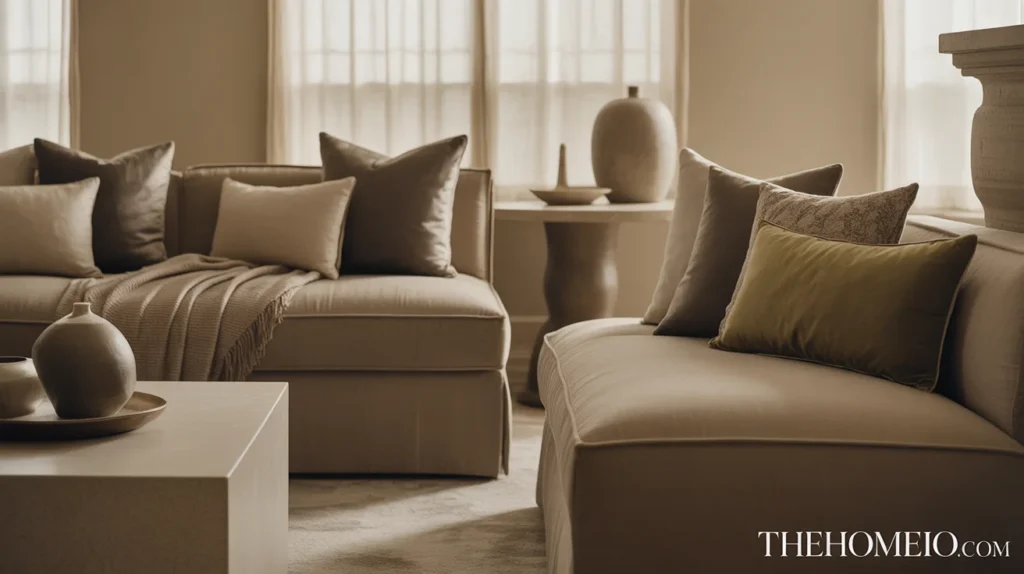
A moody neutral room usually looks best when the shades feel related. Think charcoal with stone, mushroom with beige, or olive-gray with warm taupe. Tonal decorating keeps the room calm and makes the whole palette feel intentional.
That is why many strong neutral moody living room ideas use undertones very carefully. Homes & Gardens also notes that moody spaces work best when the whole scheme stays aligned tonally, with matching undertones across paint, furniture, and materials.
4. Use Texture to Build Depth Instead of Adding More Color
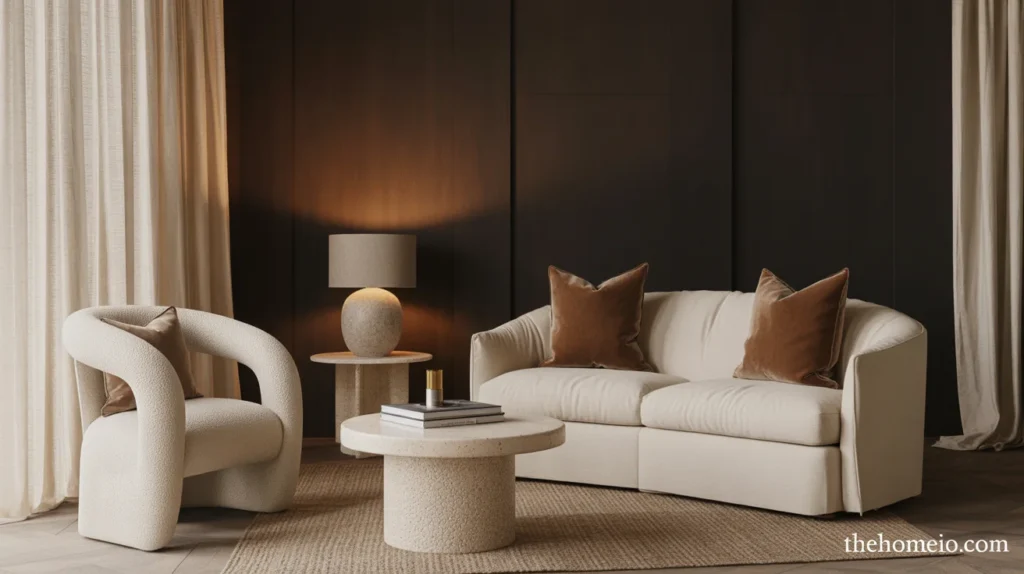
A moody neutral room needs depth, but that depth should mostly come from texture. Linen curtains, a nubby rug, boucle seating, velvet pillows, woven shades, matte plaster, and wood grain all make the room feel richer without forcing in extra color.
This is one of the easiest moody neutral living room ideas with warm tones because texture keeps the room interesting while the palette stays calm.
5. Choose One Strong Anchor Piece
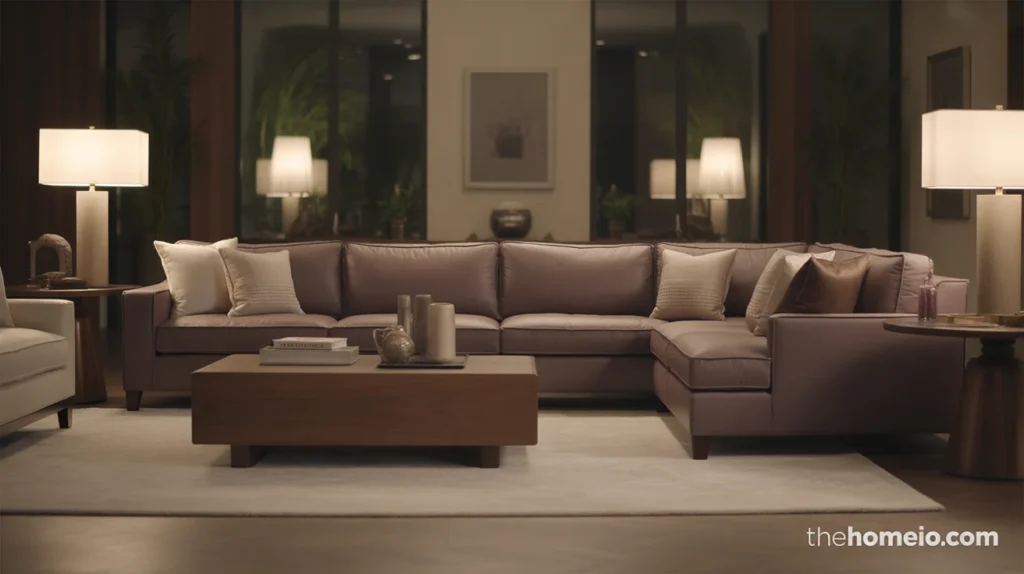
Every good moody neutral living room has something that holds the room together. That might be a dark sectional, a deep-toned wall, a large rug, a dark wood media console, or a fireplace wall in a rich neutral paint.
The room feels more polished when one piece carries most of the visual weight. Then everything else can support it instead of competing with it.
6. Add Dark Wood to Keep the Mood Grounded
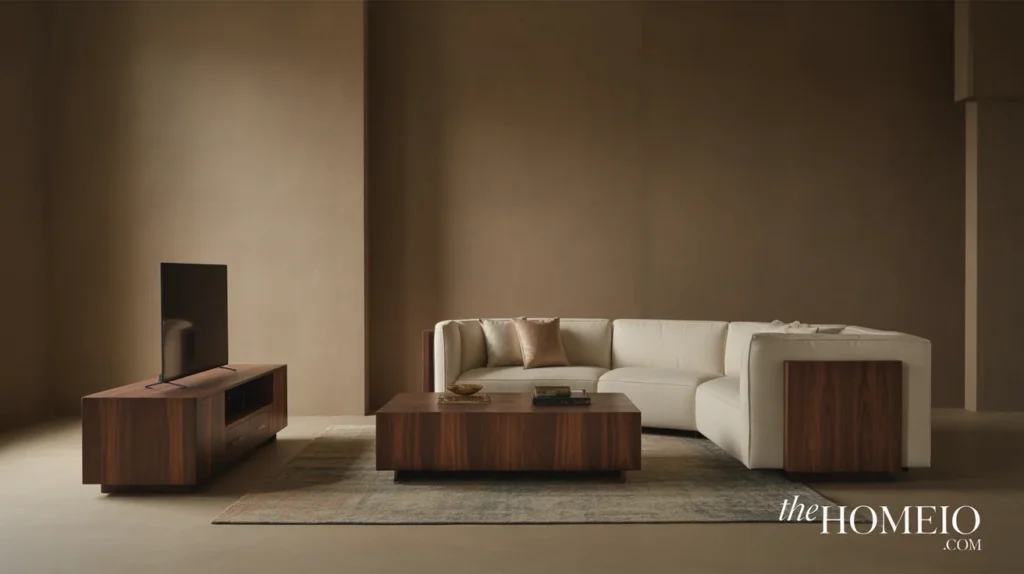
Dark wood is one of the easiest ways to make a neutral room feel moody. Walnut, espresso, smoked oak, and deeper stained wood all add warmth and structure. A coffee table, console, shelving, or side table in a richer wood tone can do a lot of the work on its own.
This is a useful move in modern moody neutral living room ideas because it makes the room feel elevated, not flat.
7. Keep Black Accents Soft and Limited
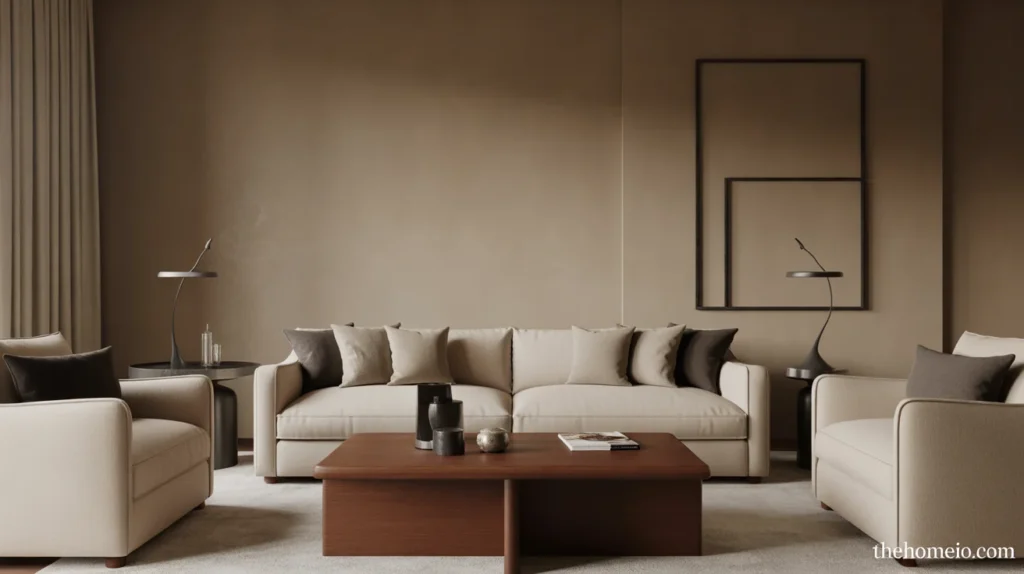
Black can help define the room, but too much of it can make the space feel sharp. Matte black frames, lamp bases, or hardware usually work better than large blocks of stark black furniture.
This is one of the most practical moody living room ideas because it brings contrast without breaking the calm feel. Use black as punctuation, not the whole story.
8. Layer the Lighting So the Room Feels Cozy at Night
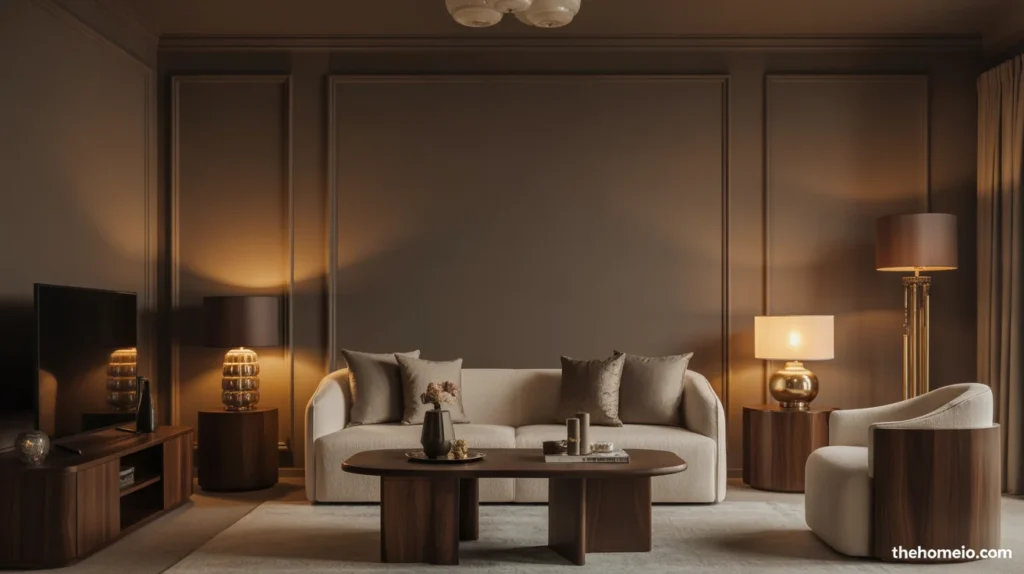
Lighting is what decides whether a room feels moody or just dim. A single ceiling light will not do enough here. Use lamps, sconces, and warm bulbs to create softer pockets of light across the room.
That is a big part of how to make a living room feel moody but not dark. Cozy paint colors alone are not enough. Recent color guidance also stresses that darker tones feel better when they are supported by warmth, texture, and the right lighting conditions.
9. Let the Rug Bridge the Whole Palette
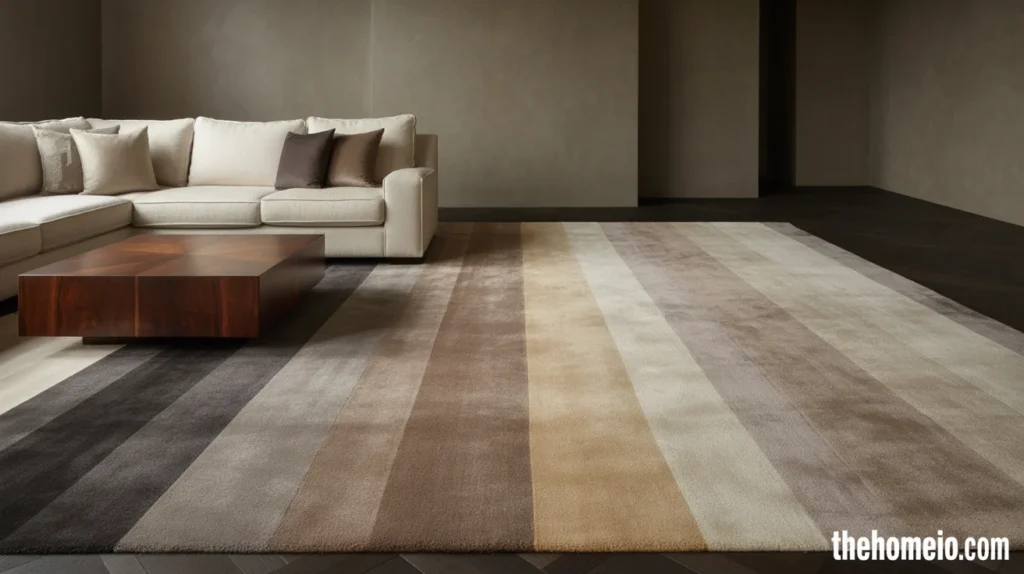
A rug is one of the easiest places to combine dark and light neutrals. Look for something with charcoal, beige, taupe, ivory, brown, or muted olive blended together. That kind of rug ties the room together without making the palette feel broken apart.
In many homes, this becomes the quiet centerpiece of the room. It is also one of the smartest answers to how to decorate a moody neutral living room without changing every surface.
10. Add Curves to Soften the Mood
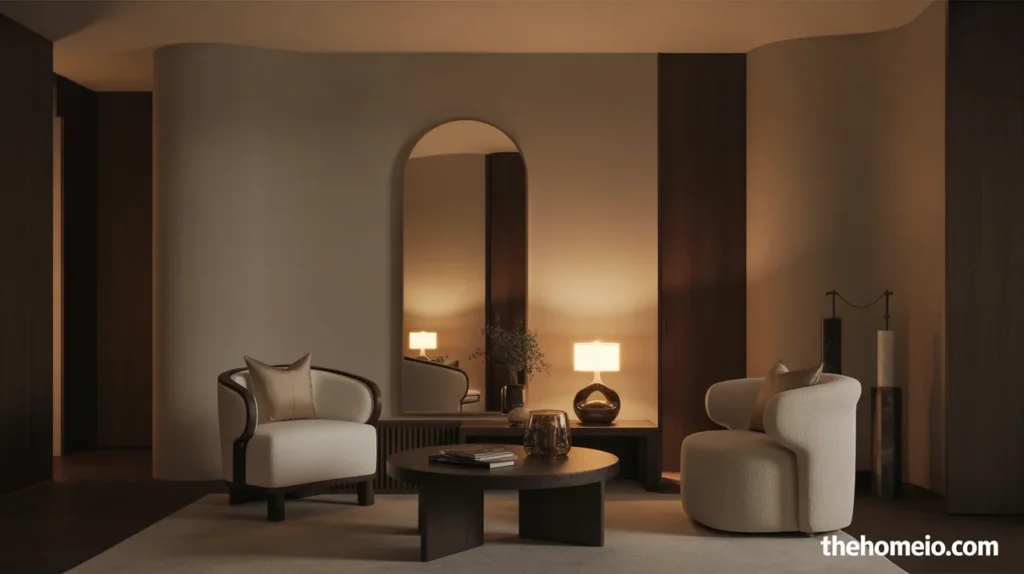
A room with dark tones can start to feel stiff if everything is too straight and boxy. Curved chairs, a round coffee table, an arched mirror, or a softly shaped lamp help the room feel easier and more welcoming.
This is one of those moody neutral decor details that changes the feeling of the room without changing the palette at all.
11. Keep the Shelves and Surfaces Edited
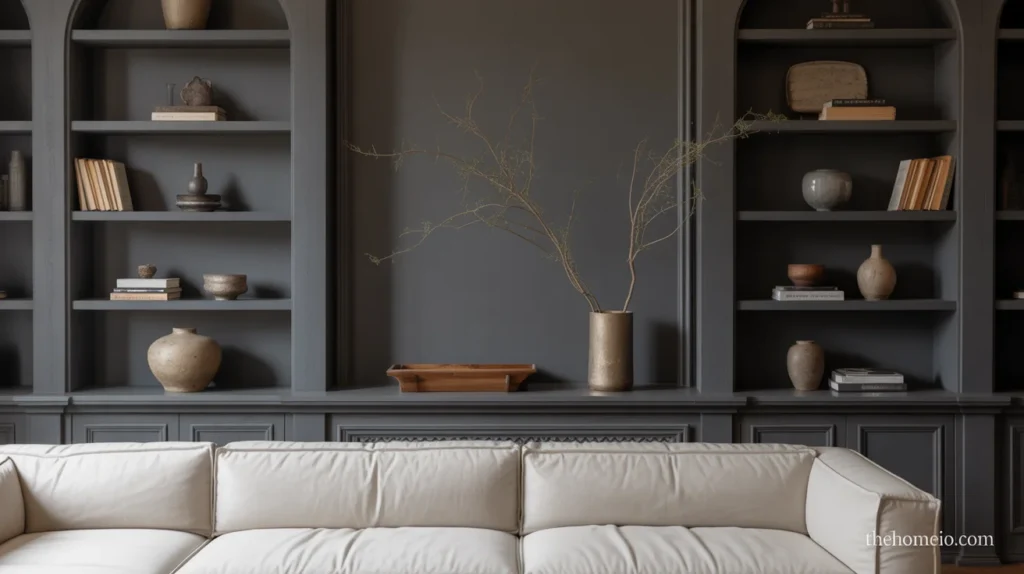
A moody neutral room looks better when it is styled with restraint. Books, pottery, one tray, one branch arrangement, and a few sculptural objects are usually enough. Too much decor makes the room feel busy, and that weakens the calm mood.
The best neutral moody living room ideas almost always look collected rather than crowded.
12. Use Drapery to Add Softness and Height
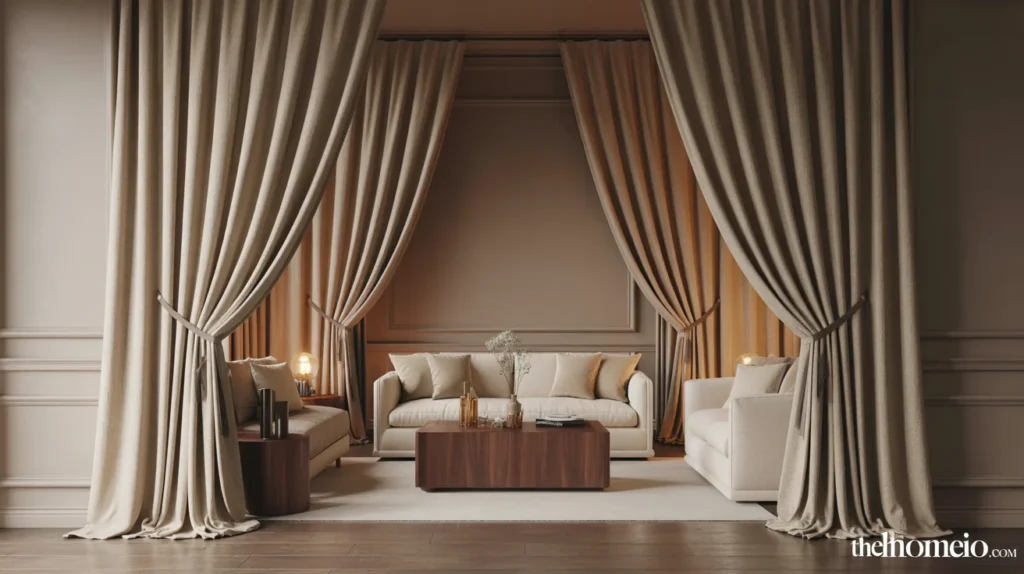
Long curtains do a lot in this kind of room. They soften the harder lines, add more texture, and make the living room feel more finished. Choose linen, woven panels, or a heavier fabric in mushroom, taupe, oatmeal, or smoky brown.
This is one of the strongest moody neutral living room ideas with warm tones because fabric adds warmth in a very quiet way.
13. Keep the Palette Tight From Start to Finish
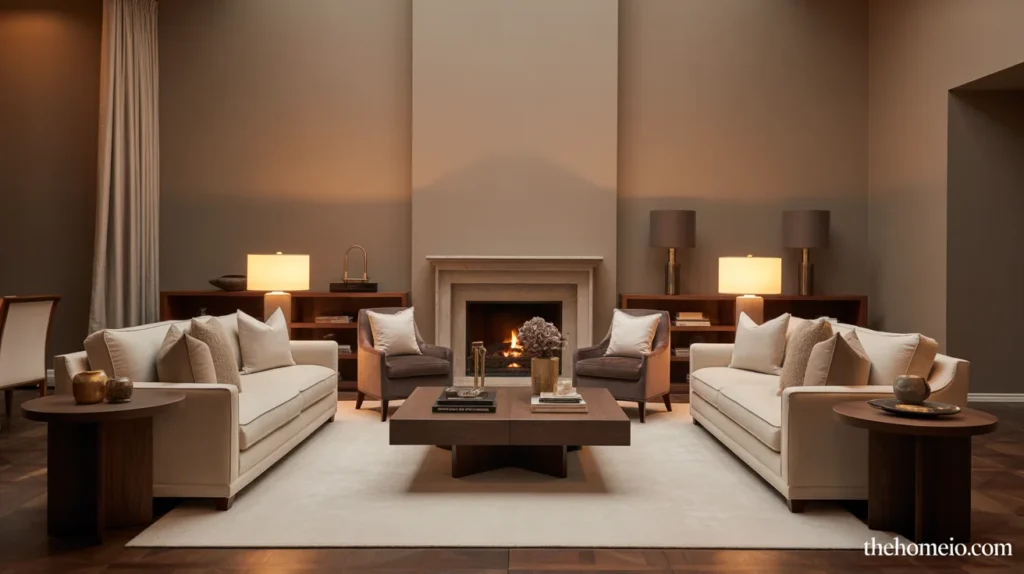
The final step is discipline. A moody neutral living room usually looks best when the palette stays narrow. Too many extra colors can weaken the effect. Stay close to your main tones, repeat them across the room, and let material changes do the rest.
That is also how to get your living room both moody and neutral without making it feel random. The room should feel layered, not scattered.
Final Thoughts
The secret to how to get your living room both moody and neutral is balance. Darker tones give the room weight. Light neutrals keep it open. Texture adds depth. Warm wood keeps it grounded. Soft lighting makes the whole thing feel livable.If you have been wondering how to make a living room feel moody but not dark, the answer is usually not more color. It has better contrast, warmer neutrals, stronger texture, and a more edited palette. That is what makes the room feel calm, stylish, and finished.


