
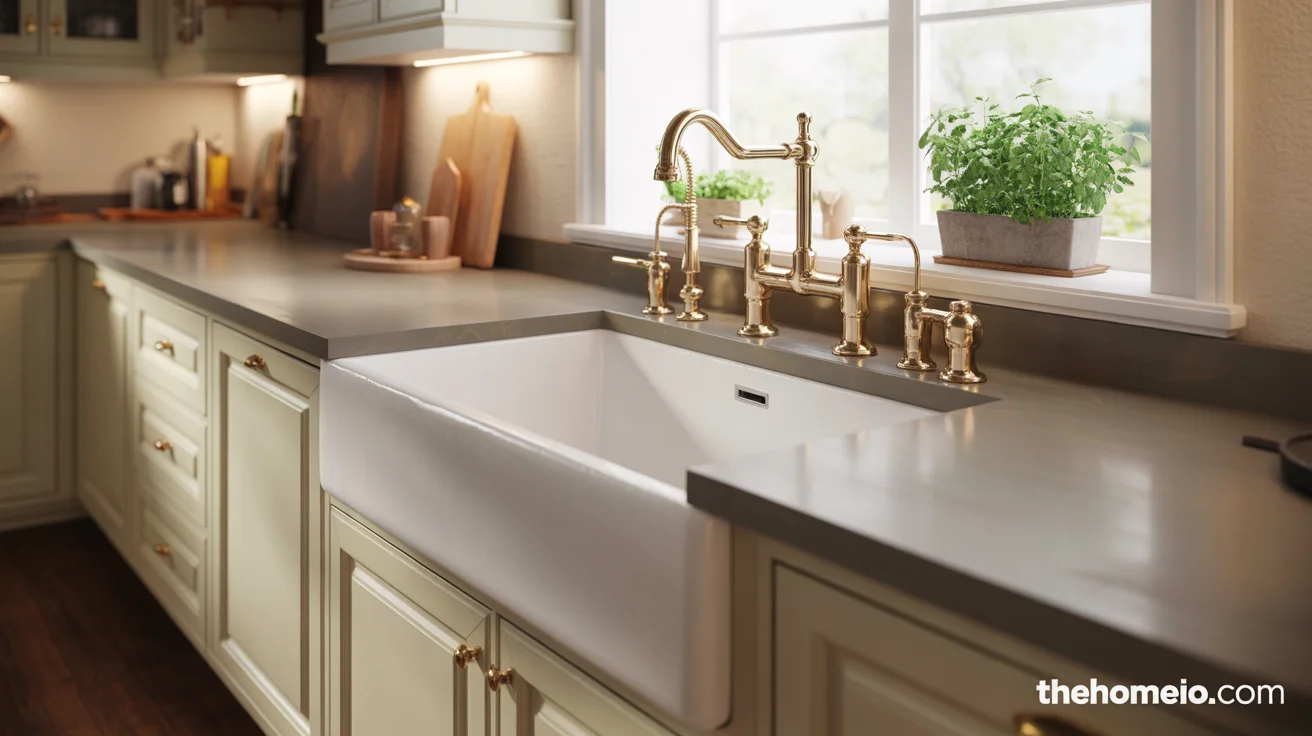
The kitchen sink is the most used fixture in the entire house.
More than the stove. More than the refrigerator. More than any other surface or appliance in the room. Yet most people spend less time choosing it than they do choosing cabinet hardware.
That is a mistake worth correcting. The right kitchen sink elevates the whole kitchen in how it looks, how it works, and how the daily rhythm of cooking and cleaning actually feels. These 13 kitchen sink ideas cover every style, every material, and every configuration worth considering before you make a final decision.
1. The Stainless Steel Undermount Sink
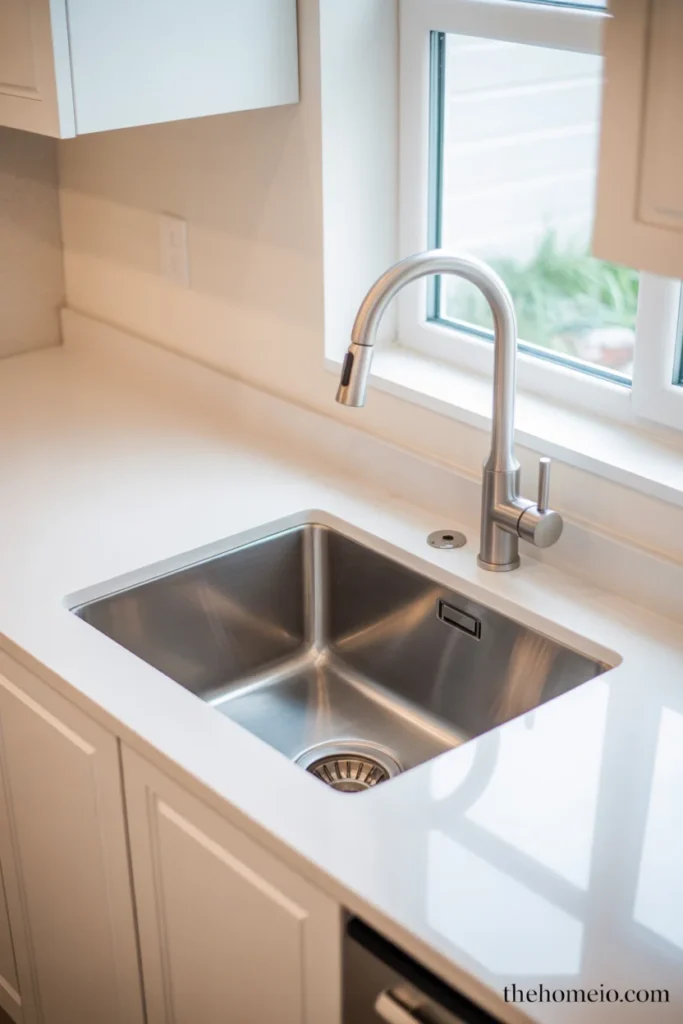
Undermount kitchen sink ideas start here for a reason. A stainless steel kitchen sink in an undermount configuration is the most practical, most durable, and most universally compatible choice available.
It sits below the countertop surface with no visible rim making counter cleanup effortless and the visual line of the kitchen cleaner. Gauge matters significantly here. A 16-gauge stainless sink is considerably more rigid and quieter than an 18-gauge version. Never go thinner than 18-gauge in a kitchen that sees daily use.
2. The Fireclay Farmhouse Sink
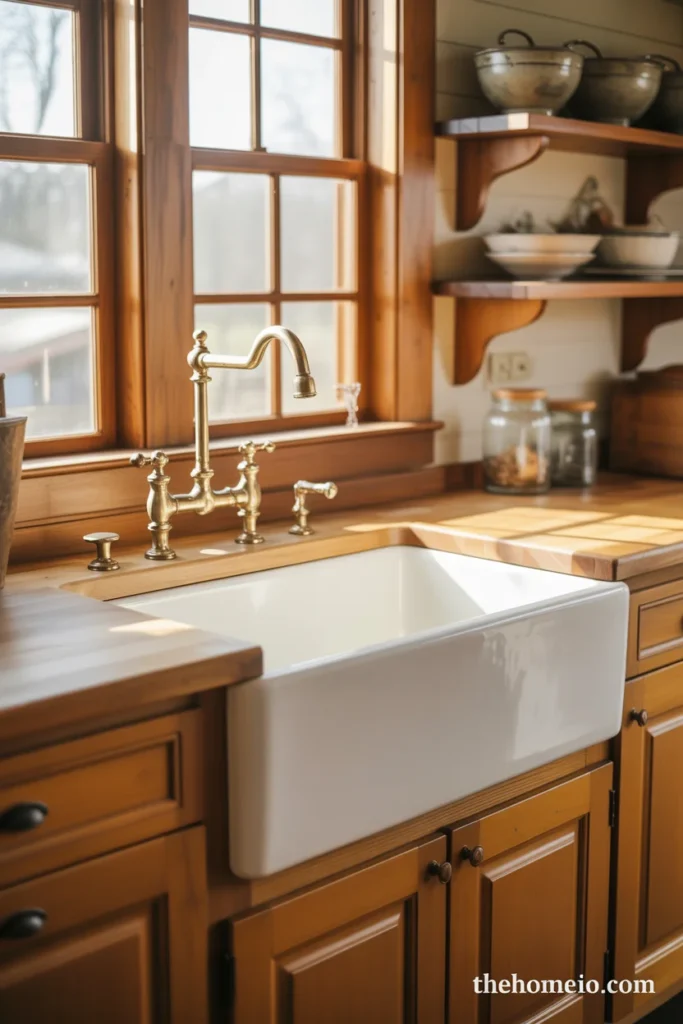
Farmhouse kitchen sink ideas rarely go further than the fireclay kitchen sink and with good reason. The deep, wide apron-front basin is one of the most iconic and most functional sink configurations in residential kitchen design.
Fireclay is fired at extremely high temperatures typically above 1800 degrees Fahrenheit, which fuses the glaze permanently into the clay body. The result is a surface that resists chipping, staining, and scratching far better than standard porcelain.
An apron front sink in matte white or biscuit pairs with virtually every kitchen style from true farmhouse to transitional to modern making it one of the most versatile choices despite its strong visual personality.
3. The Workstation Sink
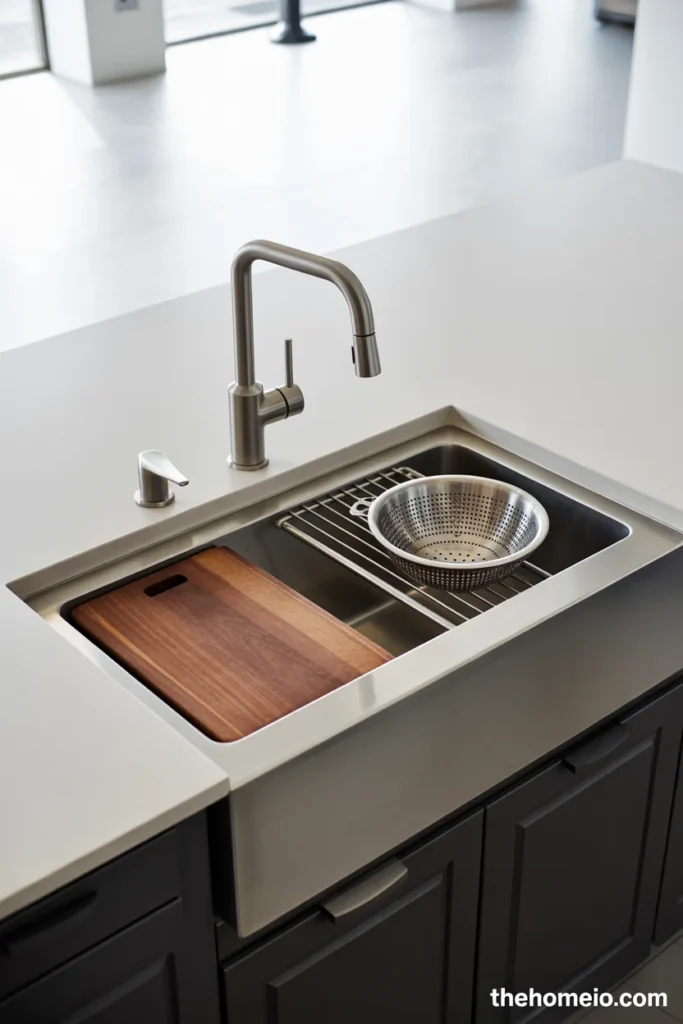
The workstation sink is the most significant evolution in kitchen sink design in the past decade. It is built with integrated ledges that run along the inside rim of the basin, accommodating sliding accessories like a colander, a cutting board, and a drying rack that sit directly over the sink.
This configuration turns the sink area into a fully functional prep station. Vegetables get washed and chopped without ever leaving the basin zone. Dishes drain directly into the sink without occupying counter space.
4. The Composite Granite Sink
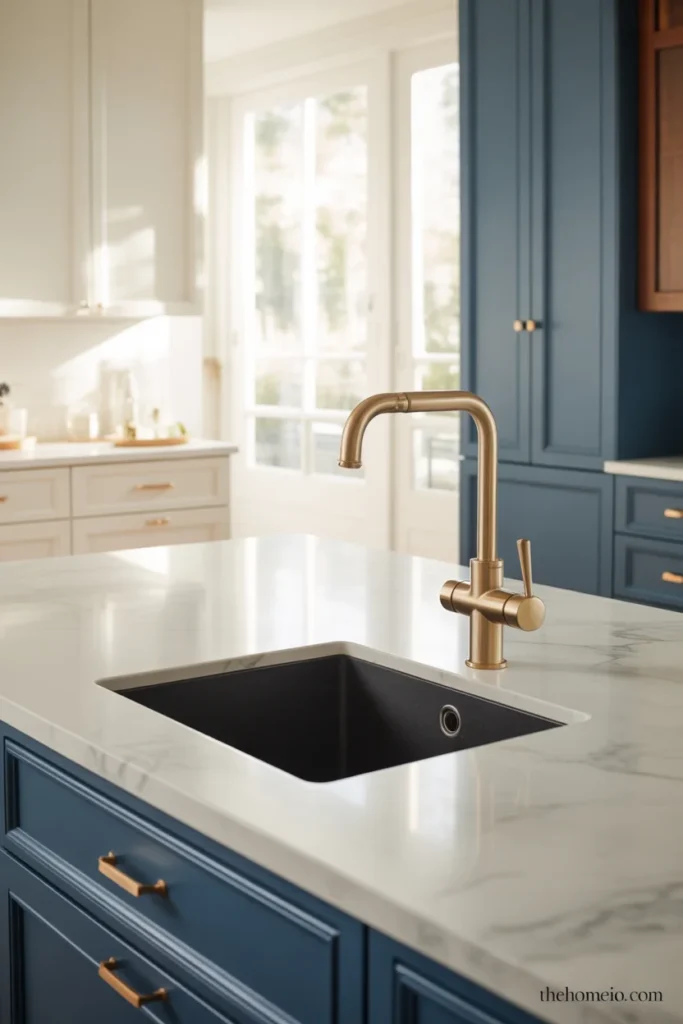
A composite granite sink is made from a mixture of granite stone dust and acrylic resin typically around 80 percent stone to 20 percent resin. The result is a sink that is harder and more heat-resistant than standard acrylic, quieter than stainless steel, and available in a far wider range of colors.
Matte black composite granite is currently one of the most requested kitchen sink styles in contemporary and transitional kitchen renovations. It pairs beautifully with both white and dark cabinetry, hides water spots and minor scratches effectively, and adds a visual weight to the sink area that stainless cannot achieve.
5. The Single Bowl Sink
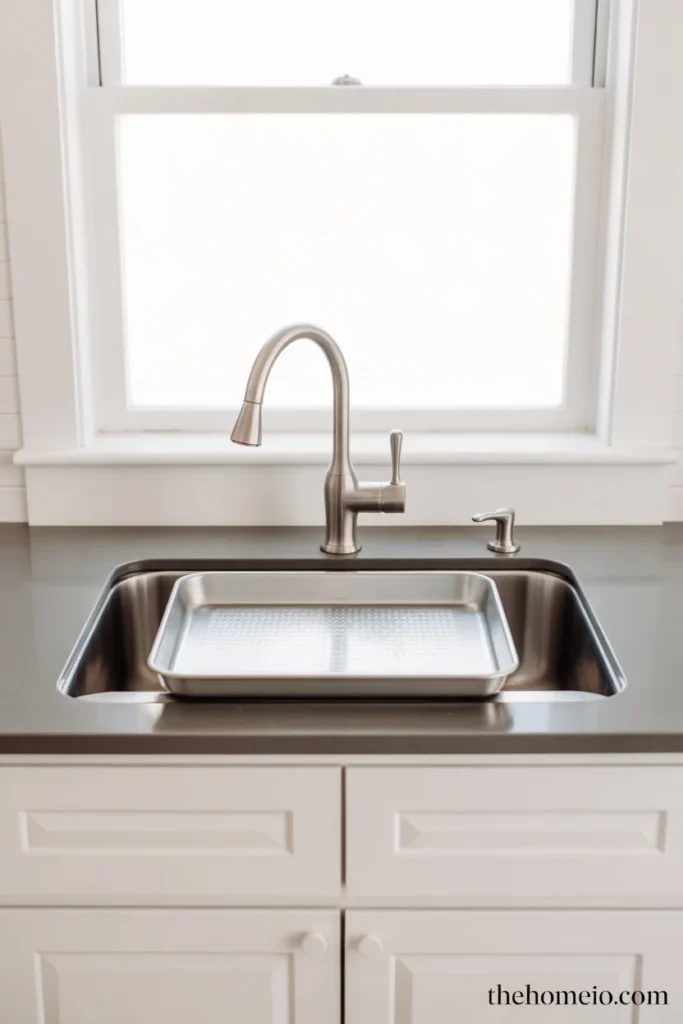
The single bowl configuration is the most straightforward answer to the single bowl vs double bowl sink debate for most modern kitchens. One large, uninterrupted basin accommodates large pots, baking sheets, and cutting boards without the divider that splits a double bowl sink getting in the way.
For kitchens with a dishwasher, which is most of them the second bowl of a double configuration rarely earns its footprint. The single bowl keeps the full basin width available for every washing task.
A minimum interior depth of nine inches is the professional standard for a kitchen sink that handles large cookware comfortably. Ten inches is preferable for anyone who regularly works with stock pots or sheet pans.
6. The Double Bowl Sink
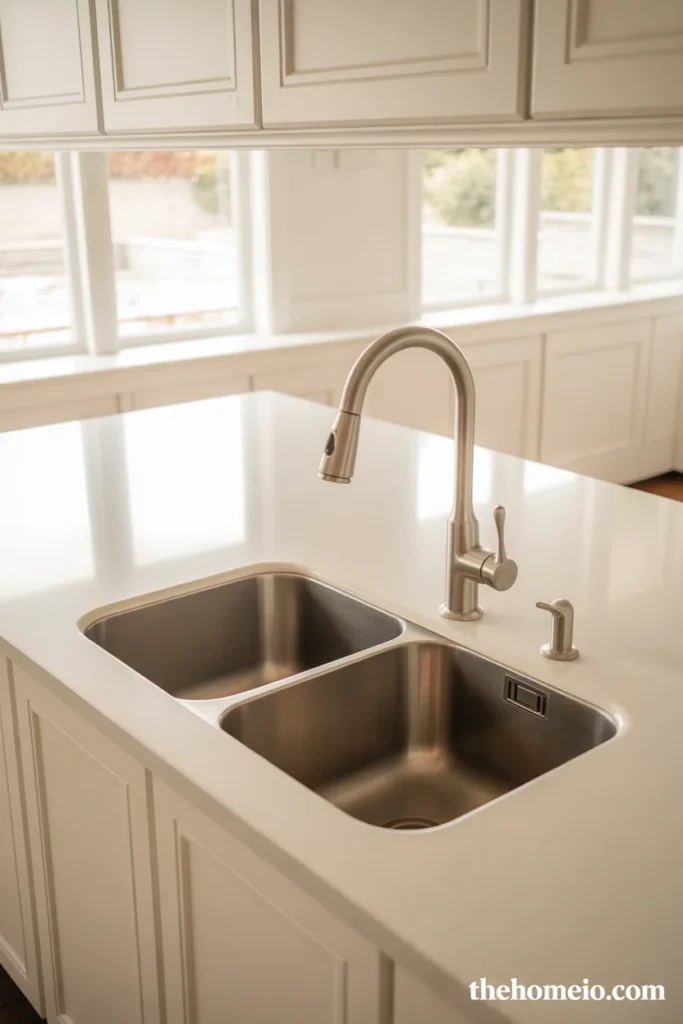
The double bowl kitchen sink earns its place in kitchens that rely on hand-washing rather than machine washing, or in households where two people regularly cook and clean simultaneously.
A 60/40 split configuration one larger bowl and one smaller one is more functional than an equal 50/50 split. The larger bowl handles washing while the smaller one manages soaking, food prep rinsing, or dish staging without requiring a dedicated drainer.
7. The Black Kitchen Sink
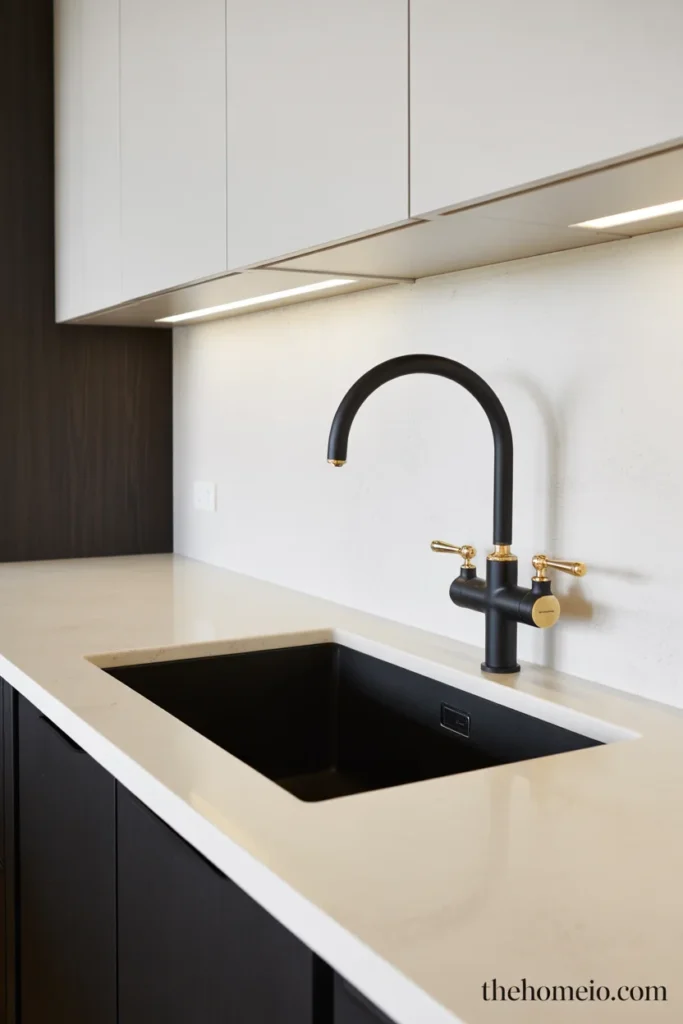
Kitchen sink ideas with black fixtures have moved well past trend status into genuine design permanence. A matte black sink, in composite granite, cast iron with enamel coating, or powder-coated stainless, makes a confident visual statement that few other fixture choices can match.
Black reads as both contemporary and bold. It anchors the sink area visually, creates a striking contrast against light countertops, and pairs naturally with brushed gold, matte black, or unlacquered brass faucet hardware.
8. The Drop-In Kitchen Sink
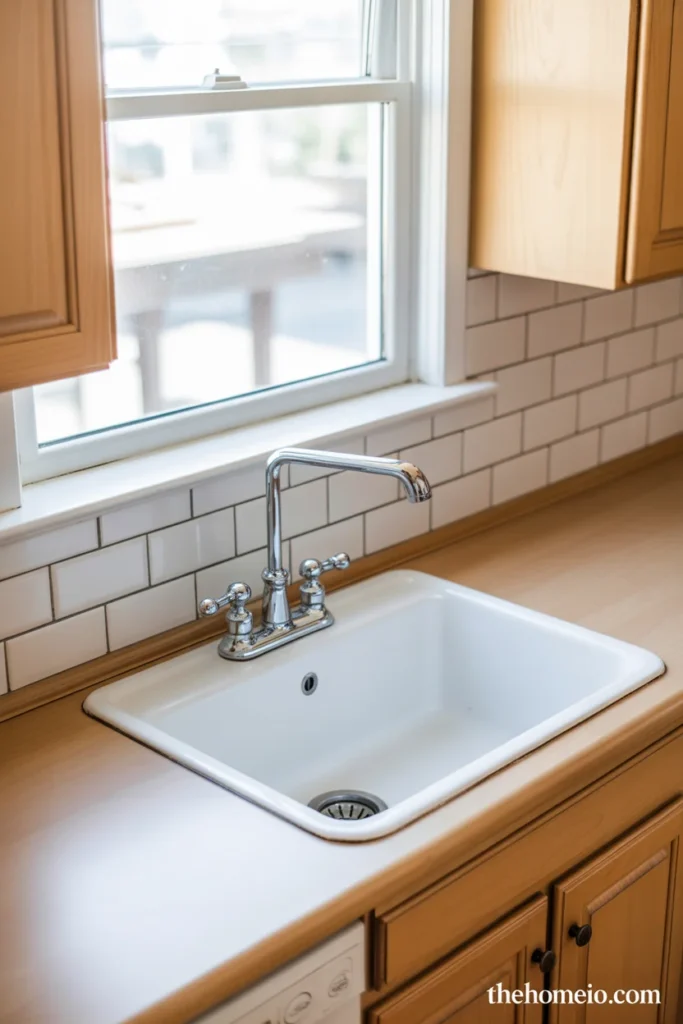
The drop-in kitchen sink gets less attention than undermount options in design conversations, but it remains the most DIY-friendly and renter-accessible configuration available. It drops into a cut hole in the countertop and is secured from above with its own rim.
For laminate countertops, a drop-in sink is often the only viable option since laminate cannot be finished as an undermount edge. For tile countertops, the raised rim also provides a cleaner transition than trying to finish a tile edge around an undermount cutout.
12 Kitchen Counter Decor Ideas That Look Stylish and Still Feel Practical
9. The Corner Kitchen Sink
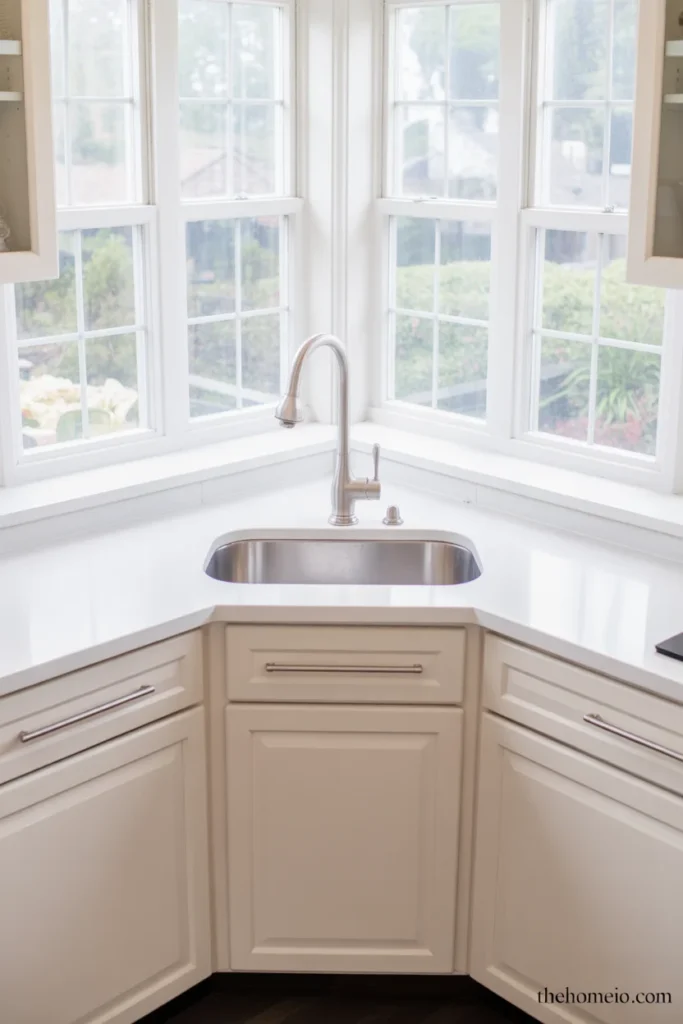
Corner kitchen sink ideas are one of the most effective solutions for L-shaped and galley kitchens where counter space is constantly at a premium. Positioning the sink at the corner reclaims linear counter space on both sides while placing the most-used fixture at the natural intersection of two work zones.
A corner sink installation requires careful plumbing planning, drain placement and supply line routing both need to account for the angled cabinet configuration. Working with a plumber during the planning phase rather than after cabinetry is installed saves significant time and cost.
10. The Integrated Drainboard Sink
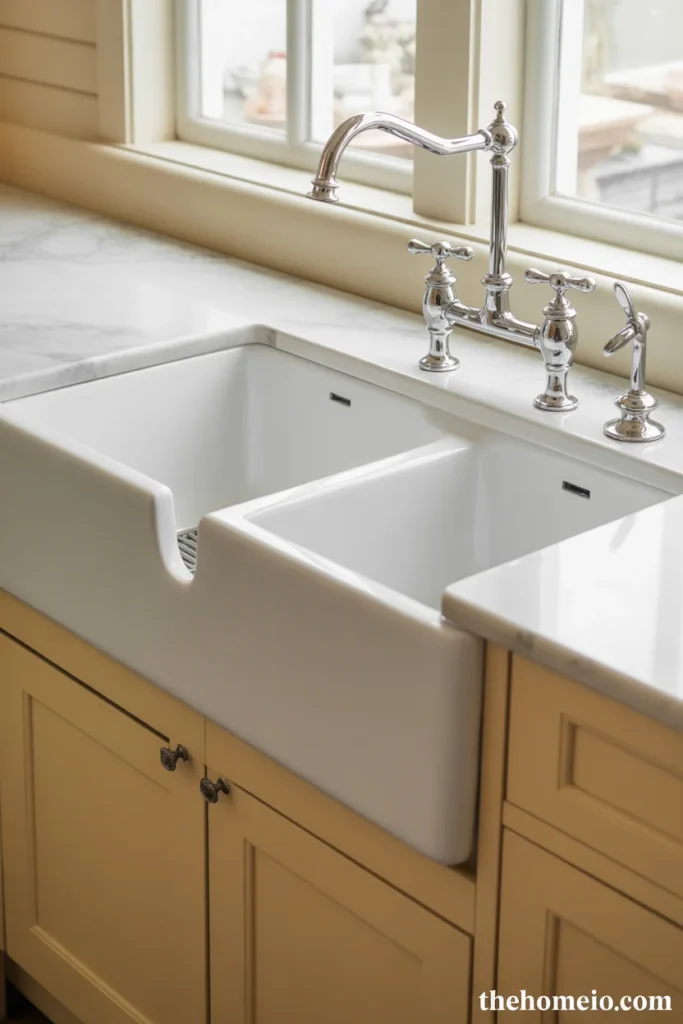
A kitchen sink with drainboard solves one of the most persistent counter clutter problems in residential kitchens, where do wet dishes go after washing? The drainboard is cast directly into the sink surface, sloping toward the basin so water drains automatically without any separate rack or mat.
Fireclay and stainless are the two most common materials for integrated drainboard sinks. The fireclay version has a classic, substantial quality that suits period-style and farmhouse kitchens. The stainless version is more contemporary and available in a wider range of basin configurations.
This is one of the most practical kitchen sink designs for households that hand-wash regularly and want to keep the counter clear without constant drying.
11. The Copper Kitchen Sink
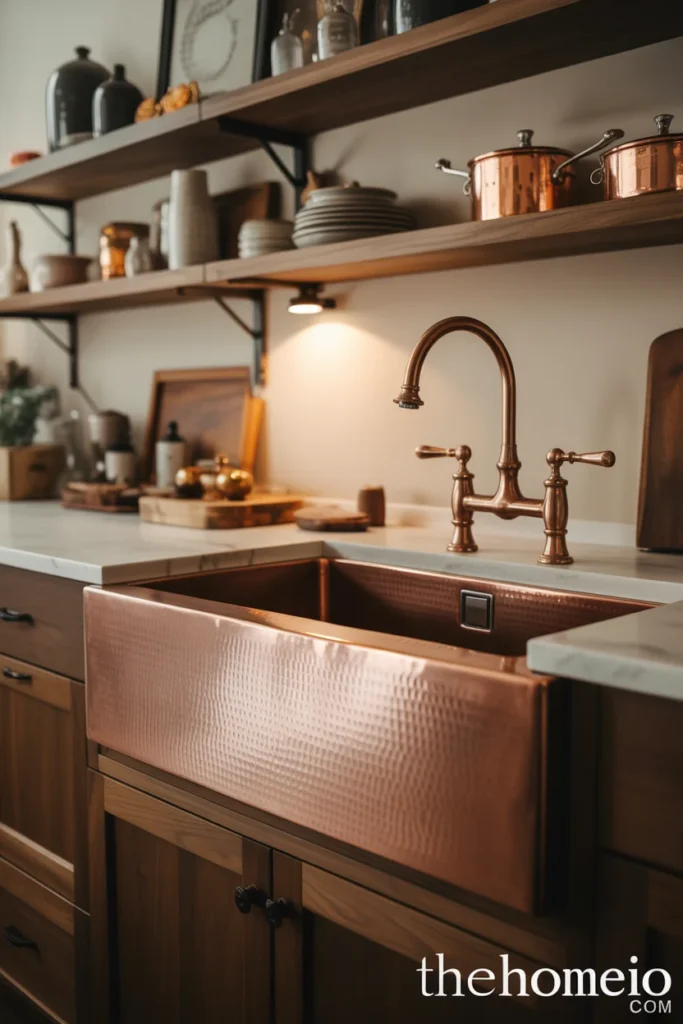
A copper sink is the most distinctive kitchen sink material choice available, and the most misunderstood. Many homeowners avoid copper because they assume it requires constant polishing to maintain its appearance. The opposite is true.
Copper develops a natural patina over time as it reacts with water, oxygen, and the oils from food preparation. This living finish deepens in color and character with every year of use. Most copper sink owners come to prefer the aged patina over the original bright finish.
Copper also has natural antimicrobial properties, a characteristic that has been studied and documented in healthcare settings and that applies equally in a kitchen environment. It is one of the few kitchen sink materials where the surface itself actively contributes to hygiene rather than simply resisting bacteria.
12. The Kitchen Sink and Faucet Pairing
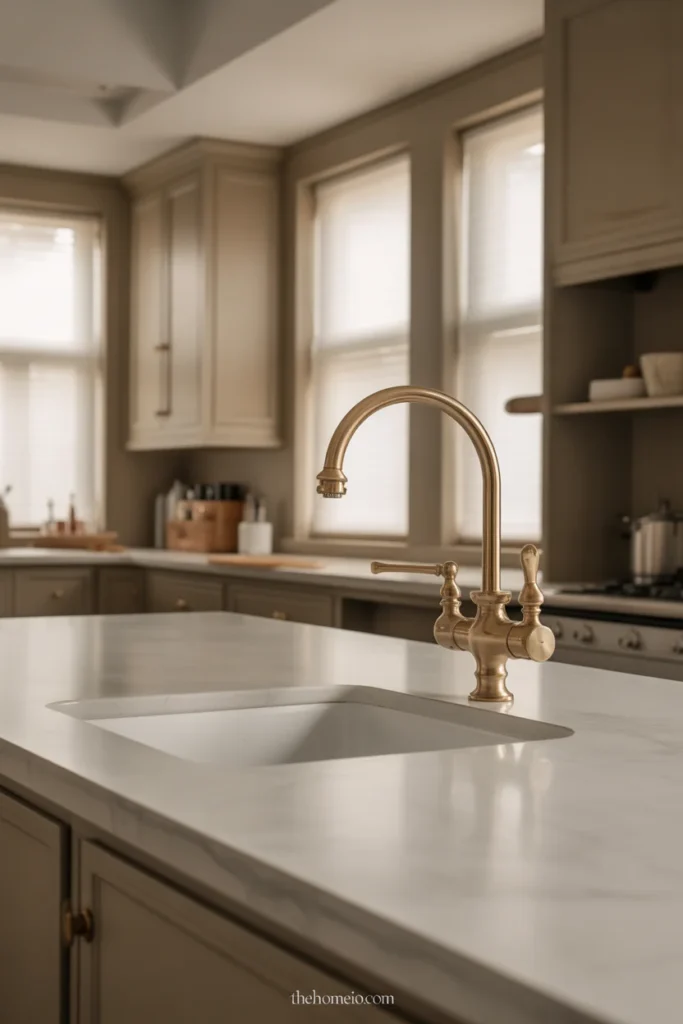
The sink and faucet are inseparable in both function and visual impact. Choosing them independently almost always produces a result that looks slightly off mismatched in scale, finish, or proportion.
Kitchen sink faucet ideas that consistently work: a pull-down sprayer faucet in brushed nickel or matte black for stainless sinks; an unlacquered brass bridge faucet for fireclay farmhouse sinks; a minimalist single-lever faucet in brushed gold for composite granite in dark tones.
Faucet height matters as much as finish. A high-arc faucet over a deep basin allows large pots to fill without tipping. A low-profile faucet over a shallow sink prevents splashing. The relationship between basin depth and faucet arc height is one of the most practically important details in any kitchen sink installation.
13. The Kitchen Sink and Countertop Pairing
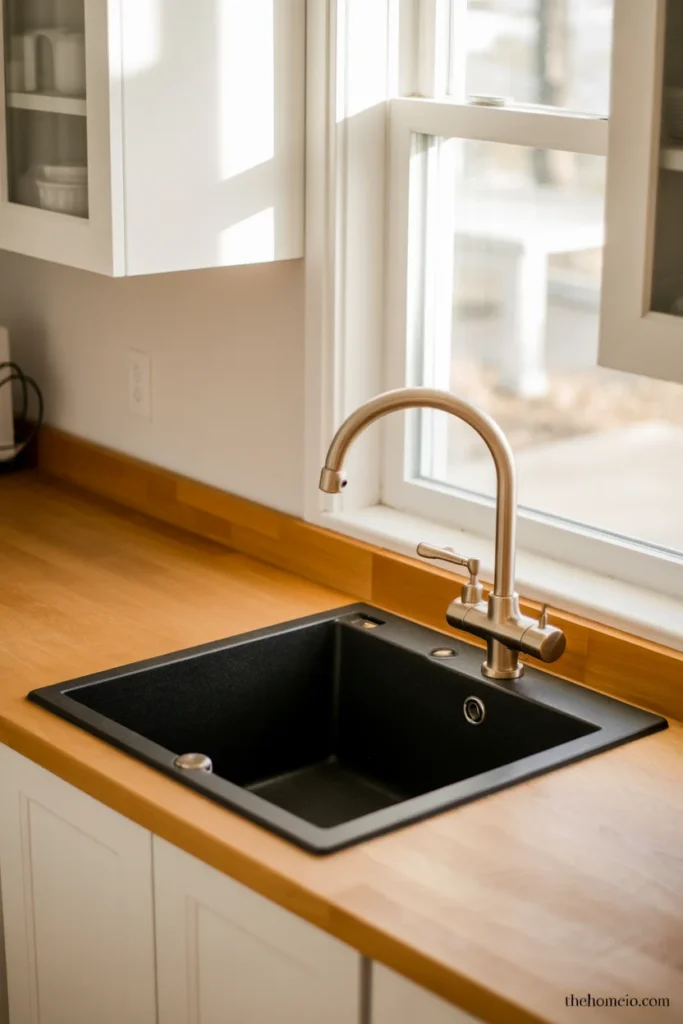
The kitchen sink countertop pairing is the most visible design relationship in the whole kitchen. Some combinations strengthen each other. Others fight.
White fireclay against dark soapstone creates a contrast that is dramatic and deeply satisfying. Stainless steel against white quartz reads as clean and contemporary. Composite granite in charcoal against warm butcher block introduces an unexpected material tension that works in the right kitchen context.
Conclusion
Most kitchen renovations choose the sink last. The cabinets come first, then the countertops, then the appliances and the sink gets whatever configuration fits the leftover space and budget.
The better approach runs the other way. The kitchen sink is the anchor of the whole room’s function. Start with what you need from it, basin depth, configuration, material, installation type. Let those decisions inform the countertop edge profile, the cabinet configuration, and the faucet selection.
A kitchen designed around the sink is almost always more functional and more cohesive, than one where the sink was chosen last.


1 thought on “13 Kitchen Sink Ideas That Balance Style and Performance Perfectly”